


POINTS CLÉS
- Votre salarié ne peut pas commencer à travailler chez un nouvel employeur tant que l'Ausländerbehörde n'a pas approuvé ce changement ; il n'y a pas de délai de grâce ni de période de mobilité automatique de 12 mois comme c'est le cas avec la Carte bleue européenne.
- Le nouveau poste doit correspondre à la qualification reconnue (Anerkennung) sur laquelle reposait l'autorisation initiale au titre de l'article 18b ou 18a ; un changement significatif de domaine d'activité peut retarder ou empêcher l'octroi de l'autorisation.
- L'autorisation de l'Agence fédérale pour l'emploi (BA) est toujours requise pour les titulaires d'une formation professionnelle au titre de l'article 18a et pour les fourchettes salariales des métiers en pénurie ; pour les postes nécessitant un diplôme au titre de l'article 18b, cela dépend du salaire et des circonstances.
- En cas de perte d'emploi, un délai de grâce de trois mois s'applique en vertu de la loi de 2023 sur l'immigration des travailleurs qualifiés, mais vous devez en informer l'Ausländerbehörde dans un délai de quatre semaines à compter de la fin de votre contrat de travail.
- Si le nouveau salaire atteint le seuil fixé pour la Carte bleue européenne de 2026 (50 700 €, ou 45 934,20 € pour les métiers en pénurie), envisagez de faire passer votre titre de séjour à un niveau supérieur afin d'accélérer l'obtention du statut de résident permanent.
Pour les salariés non ressortissants de l'UE titulaires d'un permis de travail qualifié allemand (QEP) / visa de travailleur qualifié (§ 18a ou § 18b de la loi sur le séjour des étrangers (AufenthG)), le changement d'emploi nécessite le respect strict de la procédure légale. Contrairement à la Carte bleue européenne, il n'existe pas de période de flexibilité automatique ; tout changement d'employeur nécessite une réévaluation officielle avant que le salarié puisse commencer à travailler.
Ce guide traite du changement d'employeur dans le cadre d'un visa de travailleur qualifié pour les titulaires d'un permis d'emploi qualifié au titre des articles 18b (diplôme universitaire) et 18a (qualification professionnelle) de la loi sur le séjour (Aufenthaltsgesetz). Si votre salarié est titulaire d'une Carte bleue européenne, les règles sont différentes ; veuillez consulter notre guide sur le changement d'employeur dans le cadre de la Carte bleue européenne.
À qui s'adresse cette information ?
Le permis de séjour pour emploi qualifié (Qualifizierte Beschäftigung) est un titre de séjour allemand destiné aux travailleurs non ressortissants de l'UE titulaires d'une qualification reconnue. Il existe sous deux formes :
- § 18b de la loi allemande sur le séjour (AufenthG), pour les travailleurs titulaires d'un diplôme universitaire reconnu dont le salaire est inférieur au seuil fixé pour la « carte bleue européenne ».
- § 18a de la loi allemande sur le séjour des étrangers (AufenthG), pour les travailleurs titulaires d’une qualification professionnelle reconnue (Berufsausbildung), tels que les infirmiers, les électriciens et les techniciens en mécatronique.
Ce titre de séjour ne correspond pas à la « carte bleue européenne » (article 18g), qui exige un salaire plus élevé et confère automatiquement des droits en matière de mobilité. Les termes « visa de travailleur qualifié » et « titre de séjour pour emploi qualifié » sont parfois utilisés de manière interchangeable ; ils désignent tous deux la procédure prévue aux articles 18b et 18a, abordée ici.
Dans la pratique, ces titulaires suivent un parcours plus long pour obtenir la résidence permanente (3 à 5 ans, contre 21 mois pour les titulaires de la « Blue Card » ayant le niveau B1 en allemand), mais sont confrontés à moins d'obstacles salariaux à l'embauche. Utilisez notre outil d'éligibilité au visa pré-embauche en Allemagne pour vérifier quelle catégorie de permis s'applique avant de poursuivre vos démarches.
Conditions d'éligibilité pour le nouveau poste
Trois conditions doivent être remplies pour que l'amendement soit approuvé.
1. Match de qualification
Le nouveau poste doit relever du même domaine professionnel que la qualification reconnue. Pour les postes non réglementés, la loi de 2023 sur l’immigration des travailleurs qualifiés a élargi les correspondances acceptables ; ainsi, un ingénieur en logiciels titulaire d’un diplôme en informatique peut généralement évoluer vers un poste dans la gestion de produits sans faire l’objet d’une réévaluation complète. Les professions réglementées (médecins, infirmiers, certains ingénieurs) nécessitent une procédure de reconnaissance (« Anerkennung ») complète pour chaque nouveau contexte professionnel. Un changement de domaine important, par exemple passer de l’ingénierie à la finance, fait l’objet d’un examen minutieux et peut nécessiter une nouvelle procédure de reconnaissance.
Utilisez l'outil d'éligibilité au visa préalable à l'embauche en Allemagne avant de faire une offre d'emploi, et consultez notre guide sur la reconnaissance des diplômes en Allemagne pour en savoir plus sur la procédure d'« Anerkennung ».
2. Implication de l'Agence fédérale pour l'emploi
La nécessité d'obtenir l'accord de la Bundesagentur für Arbeit (BA) pour ce nouvel emploi dépend du type de permis et du salaire :
- § 18a (formation professionnelle) : l'autorisation de la BA est toujours requise. La BA vérifie que le salaire et les conditions de travail correspondent aux tarifs en vigueur sur le marché allemand.
- §18b (diplôme, salaire de référence) : l'accord du BA n'est généralement pas requis lorsque le salaire est égal ou supérieur au taux du marché pour le poste concerné.
- §18b (poste en pénurie / échelle salariale réduite) : l'accord de la BA est requis. Il faut compter entre 2 et 4 semaines supplémentaires.
La participation de l'organisme agréé (BA) s'effectue en interne entre le service de l'immigration et le BA ; votre salarié n'a pas à déposer de demande distincte. Lorsqu'une autorisation est requise, le BA doit répondre dans un délai d'une semaine ; l'absence de réponse vaut autorisation, ce qui constitue une protection utile pour le respect des délais imposés aux RH.
3. Conformité en matière de salaires et de taux du marché
Contrairement à la « Blue Card », il n'existe pas de salaire minimum légal fixe. La rémunération proposée doit correspondre aux taux en vigueur sur le marché allemand (ortsübliche Bezahlung) pour le poste, le secteur et le lieu de travail concernés. La BA vérifie ce point lorsqu'elle intervient dans la procédure. Si la rémunération est insuffisante, la demande est rejetée ou renvoyée.
Votre employé peut-il changer d'employeur ?
Oui, mais pas librement. Le permis est lié à un employeur précis ; il est délivré avec une « Zusatzblatt » (fiche complémentaire) qui le rattache à un employeur et à un poste bien précis.
- Il n'y a pas de durée minimale pendant laquelle votre salarié doit travailler chez son employeur actuel avant qu'un changement ne soit autorisé.
- Ils ne peuvent pas démissionner vendredi et commencer à travailler chez vous lundi. Le permis doit être mis à jour avant le début de l'emploi.
- Contrairement à la Carte bleue européenne, il n'y a pas de délai automatique de 12 mois permettant la libre circulation. Une autorisation doit être obtenue à chaque fois.
- Prévoyez un délai de transition d'environ 6 à 12 semaines entre l'offre et la date de prise de fonction autorisée par la loi.
Cette procédure s'apparente à bien des égards à une nouvelle demande de permis. L'Ausländerbehörde vérifie à nouveau si le nouveau poste correspond à la qualification reconnue, si l'Agence fédérale pour l'emploi doit donner son accord et si le salaire respecte les normes en vigueur. Les demandes peuvent être déposées alors que votre salarié est encore employé ailleurs, et une « Fiktionsbescheinigung » peut être délivrée pour attester que la demande est en cours de traitement.
Étant donné que le délai d'attente pour obtenir un rendez-vous est le facteur le plus déterminant dans les grandes villes, vérifiez-le pour le consulat de votre salarié à l'aide du calculateur de délai d'attente pour les rendez-vous relatifs au visa de résidence en Allemagne.
Seuil de salaire 2026
Il n'existe pas de seuil salarial unique pour les articles 18b et 18a. Ce qui importe, c'est la conformité au marché. Cela dit, les seuils fixés pour la Carte bleue européenne constituent des repères utiles, et ils sont à prendre en compte si vous envisagez une revalorisation.
Principaux repères salariaux pour 2026
Si le salaire du nouveau poste atteint le seuil requis pour la « Blue Card » et que votre salarié est titulaire d'un diplôme universitaire, prenez le temps de réfléchir à cette option. La « Blue Card » offre un parcours de 21 mois vers la résidence permanente (avec un niveau B1 en allemand), contre 3 à 5 ans dans le cadre de l'article 18b. Cette différence est déterminante pour la fidélisation du personnel.
Comment procéder en cas de changement d'employeur
Changement d'employeur : cadre décisionnel
Utilisez ce guide d'orientation pour déterminer la voie à suivre pour votre salarié
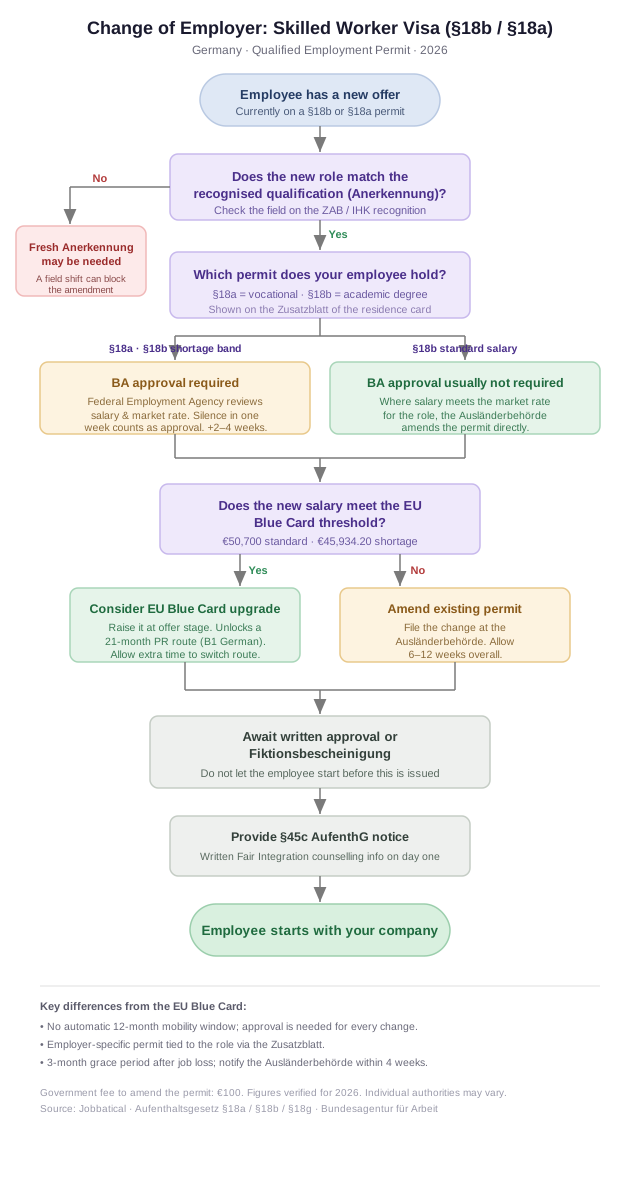
Guide étape par étape de la procédure de candidature
JobbaticalLe service « Changement d'employeur » de 's Germany se charge de la coordination avec l'Ausländerbehörde et la BA, ce qui réduit le risque de retards dus à des dossiers incomplets.
Quels sont les documents requis pour la procédure de changement d'employeur ?
Liste des documents requis pour une demande de changement d'employeur
Certaines autorités chargées des étrangers peuvent demander des documents supplémentaires. Vérifiez toujours la liste complète des documents requis auprès du service compétent ou utilisez l'outil « Germany Employer Change Checker » avant d'effectuer votre demande.
Délai de traitement et frais
Les délais et les frais varient en fonction de la ville et de la charge de travail des autorités locales.
- Berlin : environ 8 à 12 semaines à compter du début de l'année 2026.
- Munich et Hambourg : souvent plus rapide, environ 4 à 8 semaines.
- Francfort et Düsseldorf : généralement de gamme moyenne.
- Frais administratifs forfaitaires pour la modification du permis : 100 €.
- Attestation de fiction : entre 10 et 25 € environ.
- Traductions certifiées, le cas échéant : de 40 à 120 € par document.
La « Fiktionsbescheinigung » permet à votre salarié de travailler légalement pendant le traitement de sa nouvelle carte. Assurez-vous qu’elle vous soit remise lors du rendez-vous de demande. À vrai dire, la plupart des entreprises attendent trop longtemps avant d’entamer cette démarche : il faut prévoir au minimum huit semaines, et le délai d’attente pour obtenir un rendez-vous est le facteur le plus aléatoire dans les grandes villes.
Le délai de traitement d'un changement d'employeur varie de 4 à 12 semaines selon la ville ; obtenez d'abord une estimation personnalisée grâce au calculateur de délai de traitement des visas de séjour en Allemagne.
Que se passe-t-il si l'un de vos employés perd son emploi ?
La loi de 2023 sur l'immigration qualifiée a instauré un délai de grâce de trois mois pour les titulaires d'un permis de travail qualifié qui se retrouvent au chômage. Pendant cette période, le permis reste valable et le salarié peut rechercher un nouvel emploi éligible en Allemagne.
En tant qu'employeur sortant, vos obligations sont les suivantes :
- Vous devez en informer l'Ausländerbehörde dans un délai de 4 semaines à compter de la fin de votre contrat de travail, à l'aide du formulaire officiel (« Mitteilung über die Beendigung des Beschäftigungsverhältnisses »).
- Si l'accord du responsable du domaine (BA) était nécessaire pour l'embauche initiale, veuillez également en informer ce dernier.
- Fournissez une lettre de référence (Arbeitszeugnis) ; votre salarié en a besoin pour prouver que ses qualifications correspondent aux exigences de son prochain permis.
- Informez-les du délai de grâce et de leur droit de s'inscrire comme demandeur d'emploi auprès de l'Agentur für Arbeit.
Cela diffère de la « carte bleue européenne », qui prévoit également un délai de grâce de trois mois, mais offre une plus grande liberté de circulation au sein de l'Union européenne pendant cette période. Dans le cas présent, la recherche d'emploi est limitée à l'Allemagne, sauf si le salarié bénéficie d'un autre statut lui donnant droit à cette liberté.
Cela pourrait-il déboucher sur une évolution de la « carte bleue européenne » ?
Chaque changement d'employeur est l'occasion de vérifier si votre salarié remplit désormais les conditions requises pour obtenir une Carte bleue européenne. Si le nouveau poste exige un diplôme universitaire déjà reconnu en Allemagne et offre un salaire d'au moins :
- 50 700 € bruts par an pour les postes classiques, ou
- 45 934,20 € bruts par an pour les métiers en pénurie (informatique, ingénierie, santé, STIM),
Dans ce cas, il est possible de déposer une demande de Carte bleue à la place ou en parallèle de la modification. Les avantages sont réels : un titre de séjour permanent en seulement 21 mois avec un niveau B1 en allemand, des dispositions plus claires en matière de chômage et des droits de mobilité au sein de l’UE. Abordez ce sujet dès la phase d’offre. Une fois la demande au titre du §18b déposée, changer de type de permis allonge les délais et complique la procédure. Notre page consacrée au service « Permis de travail qualifié en Allemagne » et notre guide sur le changement d’employeur dans le cadre de la Carte bleue européenne couvrent ces deux voies.
Notes relatives à la conformité à l'intention des RH
§ 45c de la loi sur le séjour (AufenthG), obligation d’« intégration équitable » : à compter du 1er janvier 2026, tout employeur embauchant un travailleur qualifié non ressortissant de l’UE devra l’informer par écrit, au plus tard le premier jour de travail, de l’existence de services gratuits de conseil en matière de droit du travail et de droit social (par exemple, le réseau « Faire Integration »). Cette obligation s’applique également aux salariés qui changent d’employeur. Conservez une trace écrite de cette information. Consultez notre guide sur les obligations des employeurs au titre du § 45c.
Reconnaissance du diplôme pendant la période de transition : si la reconnaissance initiale était conditionnelle (reconnaissance partielle avec une mesure compensatoire en attente), vérifiez que la condition a bien été remplie avant de déposer la demande. Une mesure compensatoire en attente peut bloquer la modification.
Obligations liées au BA en cours : le permis est délivré pour un poste spécifique. La promotion d'un salarié à un poste sensiblement différent, notamment dans un autre domaine, peut nécessiter une nouvelle procédure de changement d'employeur.
Avertissement : les règles en matière d'immigration changent assez fréquemment ; veuillez vous renseigner auprès de sources officielles ou nous contacter pour obtenir les dernières informations avant de prendre toute décision.
Foire aux questions : Visa allemand pour travailleurs qualifiés – Changement d'employeur

.svg)
.svg)