.svg)



Principaux enseignements
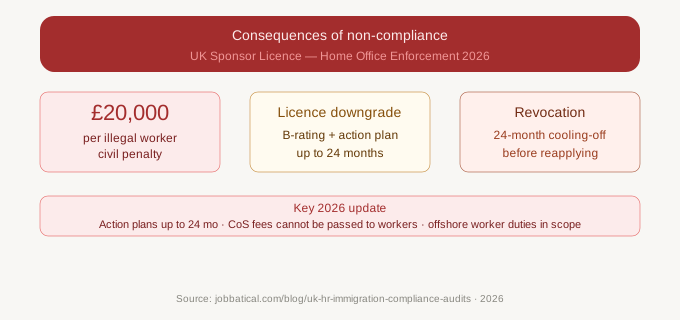
- Penalties: Up to £20,000 per illegal worker, plus A-to-B rating downgrade,vlicence suspension, or revocation for non-compliance
- Detection is now automated: UKVI cross-checks your SMS records against HMRC payroll data, so breaches surface in days, not at annual visits.
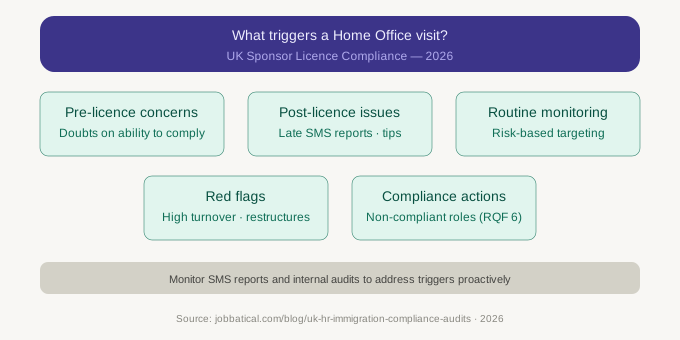
- Triggers: Late SMS reporting, intelligence referrals, anonymous tips, or pre-licence doubts prompt most visits.
- Mock audits are your safety net: A dry-run against current sponsor guidance finds gaps before UKVI does, with no enforcement risk.
- 2026 focus: Record-keeping, RQF Level 6 roles, £41,700 salary floor, and eVisa share-code verification by 31 December 2026.
This guide is written for the person who has to be ready for that visit: the internal audit lead, the compliance officer, the HR manager who owns the Sponsor Management System (SMS). It covers what triggers an audit, what UKVI actually checks, the document pack you need on hand, how a mock audit works, and exactly what happens if you fail.
What Is a Home Office Compliance Audit?
A Home Office compliance audit, also called a UKVI compliance visit, is an inspection that checks whether you are meeting your sponsor duties under the Immigration Rules. Those duties cover three things: accurate record-keeping, timely reporting through the SMS, and preventing illegal working.
Audits fall into two categories:
- Pre-licence audits: Carried out before your licence is granted, to confirm you can actually meet sponsor duties.
- Post-licence audits: Carried out at any point after, to monitor ongoing compliance.
The Home Office now cross-references your SMS entries against HMRC payroll data automatically. A salary that dips below the threshold, a worker who stops appearing on payroll, a role that doesn't match its Certificate of Sponsorship. These can flag before a human caseworker is involved.
What Triggers a Home Office Compliance Visit?
Inspections are rarely random. UKVI monitors sponsor behaviour constantly, and most visits are set off by a specific anomaly, a reporting failure, or outside intelligence. Knowing the triggers lets you close the gaps that invite scrutiny in the first place.
If your organisation has a Level 1 User who has left or gone inactive, that alone can weaken your ability to respond to reportable events on time, which is one of the most common post-licence triggers.
What are the Types of Home Office Visits
UKVI uses several inspection formats, and the one you get depends on perceived risk and the trigger involved. Your key personnel need to be ready for any of them, including the ones that give you no warning.
Unannounced visits deserve their own line of preparation. Officers can enter your premises, inspect records, access your SMS data, and interview any employee. Cooperation is not optional; obstructing a visit is itself a breach and will count against you in any decision that follows.
What the Home Office Checks During an Audit?
Auditors work through a defined set of areas. Prioritise these in your internal reviews, because they are exactly where UKVI applies the most scrutiny.
What are the Documents to Have Ready for a Home Office Audit?
When a desk-based audit lands, you may have only 5–10 working days to produce records. That is not enough time to build a document pack from scratch. Assemble it now and keep it current. Auditors will expect to see, for each sponsored worker and for the organisation as a whole:
The Sponsor Licence Compliance Audit Checklist
Use this as your internal readiness checklist. Work through it quarterly, not annually.
- Review policies and procedures. Confirm your HR policies cover sponsored-worker management, right-to-work checks, and SMS reporting. Update them for hybrid and remote working.
- Train key personnel. Brief your Authorising Officer and Level 1 Users on sponsor duties, audit readiness, and eVisa share-code verification. Untrained personnel is a recurring audit failure.
- Run mock compliance audits. Simulate a real visit: review records, test staff knowledge with mock interviews, and fix gaps before UKVI finds them.
- Organise digital records. Keep CoS assignments, contracts, payslips, and right-to-work evidence centralised, secure, and instantly retrievable.
- Verify job and salary compliance. Confirm every role still meets the skill level and salary floor, and keep evidence the vacancy is genuine.
- Complete the eVisa transition. Help workers set up UKVI accounts and share codes ahead of the 31 December 2026 deadline.
- Use dedicated HR software. Automate tracking of visa expiry, SMS deadlines, and retention schedules to build a clean digital audit trail.
Develop a localised version of this checklist and schedule quarterly mock audits so your organisation stays audit-ready year-round. Talk to us about preparing for a Home Office visit.
What Is a Mock Sponsor Licence Audit, and Do You Need One?
A mock audit is an independent, dry-run inspection of your compliance position against current Home Office sponsor guidance. It mirrors what a real UKVI visit assesses, but it is run by your own team or an external adviser, so findings carry no regulatory consequences. You fix issues internally, at your own pace, with no enforcement risk.
A thorough mock audit covers:
- Personnel file review against the required record checklist, flagging what is missing, inconsistent, or out of date.
- SMS cross-check confirming role titles, salaries, and work locations match what the SMS shows for each worker.
- Reporting history review confirming every reportable event was filed within the deadline.
- Right-to-work audit confirming a valid check and statutory excuse exists for every worker.
- A written findings report with prioritised, specific fixes.
Most employers discover their weakest spot is reporting, not record-keeping. A worker changed roles, moved to a hybrid arrangement, or had a salary adjustment, and nobody filed it inside 10 days. A mock audit catches that pattern before it becomes the reason your licence gets downgraded.
What Happens If You Fail a Home Office Audit?
Where you land depends on the severity of the breach and whether it looks like an oversight or deliberate non-compliance.
If your licence is revoked, the consequences reach beyond your own hiring; your sponsored employees can lose the right to stay. Our guide on what happens if your sponsor licence is revoked walks through the fallout and the options.
During the Home Office Visit
How your team responds on the day shapes the outcome. Make the process smooth, and keep a clean record of it.
- Cooperate fully. Give access to premises, records, and staff. Be honest and responsive.
- Have key personnel available. Your Authorising Officer and Level 1 Users should be present or reachable.
- Document the visit. Note the questions asked and the information you provided, for post-visit follow-up.
- Designate a lead contact. One person should coordinate responses so the visit doesn't turn chaotic.
Home Office Post-Visit Actions
The work isn't over when the inspector leaves. Acting fast on feedback demonstrates commitment to compliance and can soften any penalty.
- Review feedback. Address anything raised, including action plans for minor breaches (now up to 24 months).
- Implement improvements. Update processes based on the findings so the same issue can't recur.
- Appeal if necessary. Challenge penalties or sanctions within 28 days where applicable.
- Log everything. Record post-visit actions in your HR system for the audit trail UKVI expects on an ongoing basis.
Les pièges les plus courants et comment les éviter
Most licences are lost through administrative slips, not deliberate rule-breaking. These are the recurring failures:
- Incomplete records. Use digital storage and regular spot-checks.
- Late reporting. Set automated SMS deadline alerts; this is the single most common breach.
- Non-compliant roles. Verify each role against current skill and salary rules at onboarding.
- Untrained staff. Provide ongoing training so key personnel know their duties.
- Payroll and SMS drift. Reconcile HMRC payroll against SMS monthly, because the two are now matched automatically.
Build these pitfalls into your audit framework so you're identifying the risks proactively, not explaining them to an officer after the fact.
Disclaimer : Immigration rules change frequently please verify with official sources or contact us for the latest information before making any decisions.
Foire aux questions sur les audits de conformité en matière d'immigration dans le domaine des ressources humaines et les visites du Home Office

.svg)
.svg)