

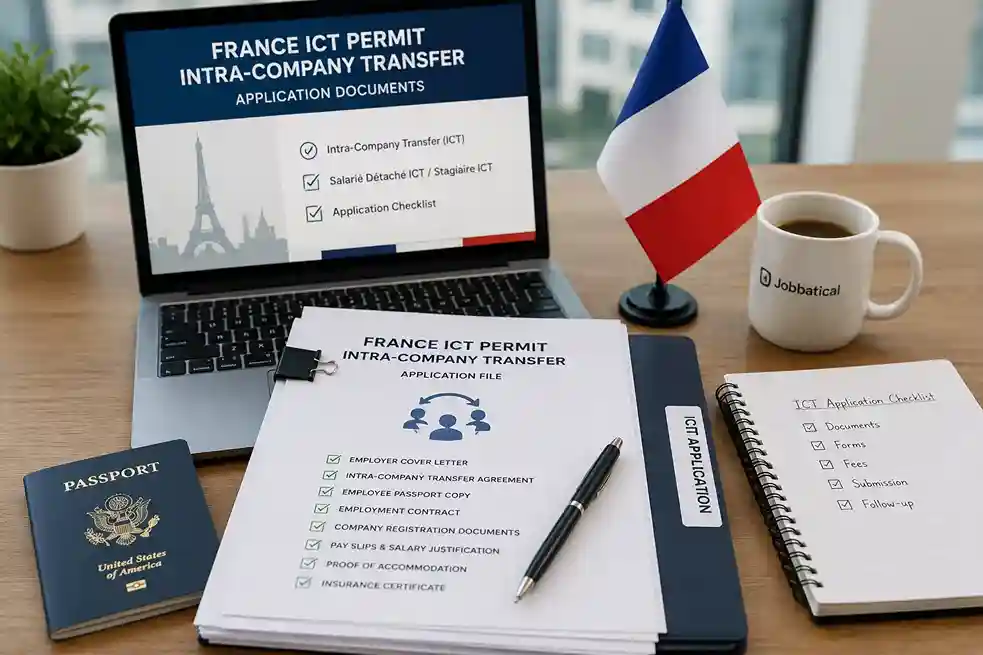
WICHTIGSTE ERKENNTNISSE – IKT-Aufenthaltsgenehmigung in Frankreich
- Die französische ICT-Genehmigung (Salarié détaché ICT) ermöglicht die Entsendung von Führungskräften, Fachkräften und Auszubildenden in Ihre französische Niederlassung ohne Arbeitsmarktprüfung.
- Unterscheidung der Aufenthaltsgenehmigungen nach Einsatzdauer: die Mehrjahresgenehmigung für Einsätze von mehr als 12 Monaten, das „Stagiaire ICT“-Visum für Einsätze von bis zu 12 Monaten.
- Der Mindestlohn für das Jahr 2026 beträgt 1.867,02 € brutto pro Monat (SMIC) und wird von der entsendenden Konzerngesellschaft für die gesamte Dauer des Einsatzes garantiert.
- Arbeitgeber reichen über ANEF einen Antrag auf Arbeitserlaubnis ein und entrichten vor der konsularischen Visumphase eine Arbeitgebersteuer in Höhe von 108 €.
- Die Aufenthaltsgenehmigung ist auf drei Jahre befristet und kann nicht verlängert werden. Planen Sie daher frühzeitig eine Statusänderung oder eine sechsmonatige Bedenkzeit ein.
Die französische ICT-Aufenthaltsgenehmigung, auf Französisch als „Salarié détaché ICT“ bezeichnet, ist eine Aufenthaltsgenehmigung für Führungskräfte, Fachkräfte und Auszubildende aus Nicht-EU-Ländern, die vorübergehend zu einer französischen Niederlassung innerhalb derselben Unternehmensgruppe entsandt werden. Sie basiert auf der EU-ICT-Richtlinie (2014/66/EU), sodass die Rahmenbedingungen in allen Mitgliedstaaten harmonisiert sind.
Dieser Leitfaden führt Personalabteilungen durch die verschiedenen Wege, Gehaltsregelungen, Maßnahmen des Arbeitgebers, Kosten, Zeitpläne und Compliance-Anforderungen für das Jahr 2026.
Was ist die französische IKT-Genehmigung und für wen ist sie bestimmt?
Die Genehmigung für unternehmensinterne Entsendungen nach Frankreich (ICT), offiziell bekannt als „Salarié détaché ICT“, ist ein spezieller Einwanderungsweg, der für multinationale Unternehmen konzipiert wurde. Sie ermöglicht es einem Konzern, einen bestehenden ausländischen Mitarbeiter zu einer französischen Tochtergesellschaft oder Niederlassung zu entsenden, ohne dass dieser mit einem lokalen französischen Arbeitsvertrag eingestellt werden muss. Der Entsandte bleibt auf der Gehaltsliste des Unternehmens in seinem Heimatland, während er einen festgelegten, befristeten Auftrag in Frankreich ausführt, wodurch ein nahtloser Wissenstransfer und die Geschäftskontinuität gewährleistet werden.
- Führungskräfte der obersten Ebene: Führungskräfte auf höchster Ebene, die für die Leitung der französischen Niederlassung oder für die Leitung einer wichtigen Abteilung oder Funktion innerhalb dieser Niederlassung verantwortlich sind.
- Fachkräfte: Schlüsselpersonal, das über fortgeschrittene, hochspezialisierte Kenntnisse oder firmeneigenes Fachwissen verfügt, das für den Betrieb, die Dienstleistungen oder die Ausrüstung des Gastunternehmens von wesentlicher Bedeutung ist.
- Nachwuchskräfte: Hochschulabsolventen, die im Rahmen eines strukturierten betrieblichen Karriereförderungs- oder Management-Trainee-Programms nach Frankreich versetzt werden.
- Anforderung bezüglich der Zugehörigkeit zur selben Unternehmensgruppe: Das entsendende (ausländische) Unternehmen und das aufnehmende (französische) Unternehmen müssen genau derselben Unternehmensgruppe angehören. Die Einwanderungsbehörden verlangen einen dokumentierten Nachweis für eine echte Kapitalverbindung zwischen den beiden Unternehmen.
- Befristeter Charakter: Diese Stelle ist ausschließlich für befristete Einsätze vorgesehen und stellt kein unbefristetes Arbeitsverhältnis dar. Es wird erwartet, dass der Mitarbeiter nach Abschluss des Einsatzes zu seiner Stammorganisation zurückkehrt oder in eine andere weltweite Niederlassung wechselt.
Einen umfassenden Überblick über die vom Arbeitgeber geförderten Wege nach Frankreich finden Sie in unserem Leitfaden zur Sponsoring von Mitarbeitern in Frankreich, in dem die allgemeine Sponsoring-Landschaft sowie die Rolle von ICT darin erläutert werden.
Welche Arten von IKT-Aufenthaltsgenehmigungen gibt es in Frankreich?
Welchen konkreten IKT-Weg Sie wählen, hängt ganz von der Dienstzeit des Antragstellers und der Dauer des Einsatzes ab. Frankreich bietet zwei Hauptarten von IKT an, sowie eine vereinfachte Mobilitätsoption für Inhaber einer Aufenthaltsgenehmigung, die bereits in der EU wohnen.
- Entsandter IKT-Mitarbeiter (über 12 Monate): Hierbei handelt es sich um eine mehrjährige Aufenthaltsgenehmigung, die für Führungskräfte und Fachkräfte bestimmt ist, die einen längeren, strategisch wichtigen Einsatz antreten.
- IKT-Praktikant (bis zu 12 Monate): Dieser Weg wird in Form eines Langzeitvisums ausgestellt, das als Aufenthaltserlaubnis gilt (VLS-TS), und ist ausschließlich auf Hochschulabsolventen im Praktikum sowie auf kurzfristige Einsätze zugeschnitten.
- Mobile ICT (aus einem anderen EU-Mitgliedstaat): Ein vereinfachtes Schnellverfahren für ausländische Staatsangehörige, die bereits über eine gültige ICT-Genehmigung in einem anderen EU-Mitgliedstaat verfügen, das es ihnen ermöglicht, für ein Projekt nach Frankreich zu ziehen, ohne ein vollständiges Antragsverfahren von Grund auf neu einleiten zu müssen.
Laufzeitbegrenzungen und strenge Verlängerungsregeln:
- Maximale Aufenthaltsdauer: Die maximal zulässige Aufenthaltsdauer ist für Führungskräfte und Fachkräfte streng auf drei Jahre und für Auszubildende auf ein Jahr begrenzt.
- Nicht verlängerbar: Keine dieser Genehmigungsarten kann über die jeweiligen Höchstgrenzen hinaus verlängert werden. Nach Ablauf der Laufzeit muss der Beauftragte entweder eine Statusänderung veranlassen (z. B. in einen lokalen französischen Vertrag) oder eine vorgeschriebene Wartezeit außerhalb Frankreichs einhalten.
Vergleich der Arten von IKT-Aufenthaltsgenehmigungen in Frankreich (2026)
Falls Ihr Konzern Mitarbeiter auch in andere Märkte versetzt, erläutert unser Leitfaden zur unternehmensinternen Versetzung in Spanien, wie sich dieselbe EU-Richtlinie im Rahmen eines anderen nationalen Verfahrens auswirkt.
Wie hoch sind die Gehaltsgrenzen für die französische IKT-Aufenthaltsgenehmigung?
Die Vergütung ist einer der am stärksten unter die Lupe genommenen Aspekte jeder IKT-Anwendung. Die französischen Behörden prüfen die Gehälter streng, um den lokalen Arbeitsmarkt zu schützen und die Einhaltung nationaler Standards sicherzustellen.
- Der Mindestlohn für 2026: Ab dem 1. Juni 2026 gilt als absoluter Mindestlohnmaßstab der französische nationale Mindestlohn (SMIC), der sich auf 1.867,02 € brutto pro Monat beläuft.
- Von der Unternehmensgruppe garantiert: Der entsendende Arbeitgeber im Ausland muss eine schriftliche, formelle Garantie abgeben, dass genau dieses Gehalt für die gesamte Dauer des Auslandseinsatzes in Frankreich beibehalten wird.
- Höhere lokale Mindestlöhne: Die Einhaltung des SMIC reicht nicht immer aus. Das französische Arbeitsrecht schreibt die „Gleichbehandlung“ vor, was bedeutet, dass bestimmte Präfekturen oder branchenspezifische Tarifverträge für vergleichbare lokale Tätigkeiten einen Lohn vorschreiben können, der deutlich über dem SMIC liegt.
- Zahlung in Euro: Um Compliance-Probleme aufgrund von Wechselkursschwankungen zu vermeiden, muss der gesamte Gehaltsbetrag in Euro gezahlt werden, idealerweise auf ein französisches Bankkonto.
- Betriebszugehörigkeit innerhalb der Unternehmensgruppe: Der Mitarbeiter muss vor Einleitung des Wechsels mindestens 6 Monate ununterbrochene Betriebszugehörigkeit innerhalb der Unternehmensgruppe nachweisen können.
Gehaltsdiskrepanzen sind der häufigste Grund für eine Ablehnung von Bewerbungen. Es wird dringend empfohlen, das Gehalt deutlich über dem SMIC anzusetzen, anstatt genau auf diesem Niveau zu bleiben – insbesondere in Regionen mit hohem Lebenshaltungskostenindex wie Paris. Mit unserem Tool zur Überprüfung der Einstellungsvoraussetzungen für Frankreich können Sie ein Profil vorab auf Herz und Nieren prüfen, bevor Sie eine Entscheidung treffen. Das Tool weist bereits im Vorfeld auf Probleme hinsichtlich des Gehalts und des Karrierewegs hin.
Welche Maßnahmen muss der Arbeitgeber ergreifen, um eine ICT-Genehmigung für Frankreich zu erhalten?
Das Verfahren zur Erteilung einer französischen IKT-Arbeitserlaubnis wird vollständig vom Arbeitgeber gesteuert. Ihr Unternehmen trägt den Großteil des anfänglichen Verwaltungsaufwands, und die genaue Einhaltung der Verfahrensschritte ist von entscheidender Bedeutung, da die Visumbeantragung für den Mitarbeiter erst beginnen kann, wenn die Arbeitserlaubnis vollständig gesichert ist.
- Nachweis der Gruppenzugehörigkeit: Stellen Sie offizielle Unterlagen wie ein Organigramm, eine Gründungsurkunde und eine rechtliche Bescheinigung zusammen, aus denen die direkte Kapitalbeziehung zwischen dem entsendenden und dem aufnehmenden Unternehmen hervorgeht.
- Beantragen Sie die Arbeitsgenehmigung: Reichen Sie den offiziellen Antrag auf eine Entsendegenehmigung direkt über das Arbeitgeberportal auf der digitalen Plattform ANEF (Administration Numérique pour les Étrangers en France) ein.
- Erstellen Sie das Entsendungsschreiben: Verfassen und unterzeichnen Sie ein umfassendes Entsendungsschreiben, in dem der konkrete Auftrag, die Berufsbezeichnung, die genaue Dauer und das Vergütungspaket des Entsandten detailliert aufgeführt sind.
- Reichen Sie die SIPSI-Erklärung ein: Reichen Sie vor dem Arbeitsantritt des Arbeitnehmers eine Entsendungserklärung über das nationale SIPSI-Portal ein. Beachten Sie, dass die Arbeitsaufsichtsbehörden die SIPSI-Daten routinemäßig mit den ANEF-Aufzeichnungen abgleichen, um die vollständige Einhaltung der Vorschriften sicherzustellen.
- Nachweis des Gehalts: Legen Sie einen stichhaltigen Nachweis vor, dass die Vergütung den SMIC-Schwellenwert für 2026 erreicht, sowie eine detaillierte Stellenbeschreibung, aus der die besonderen Fachkenntnisse oder die Führungsposition des Mitarbeiters hervorgehen.
In der Praxis ist der Nachweis der Konzernbeziehung der Schritt, der die Anträge am meisten verzögert; beginnen Sie daher frühzeitig mit der Zusammenstellung der Gesellschafterverzeichnisse. Unsere Übersicht über die französischen Arbeitgeberbesteuerungsvorschriften für ausländische Mitarbeiter ist in diesem Zusammenhang lesenswert, da die Gehaltsstrukturen direkt in Ihre ICT-Nachweise einfließen.
Wo beantragt man die französische IKT-Genehmigung?
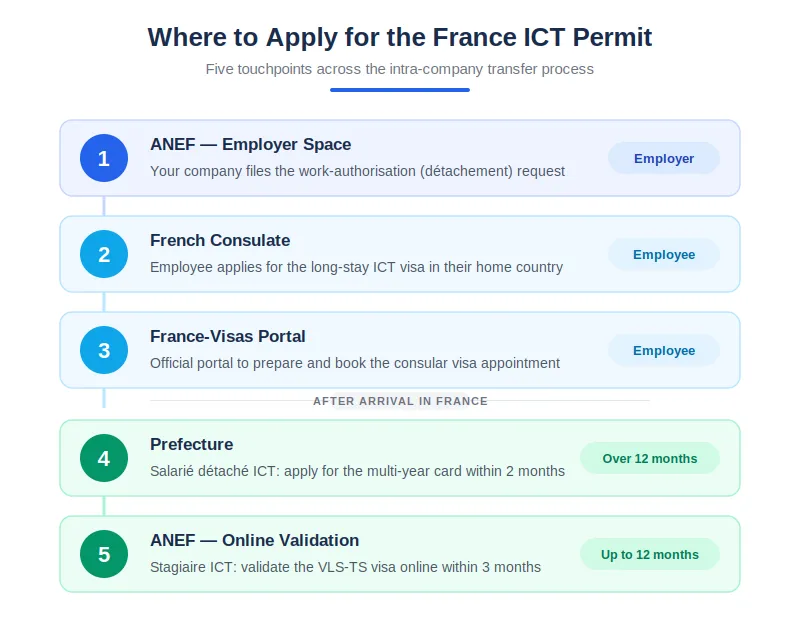
Die Abwicklung einer unternehmensinternen Versetzung (ICT) nach Frankreich im Jahr 2026 erfordert die Bewältigung eines mehrstufigen Einwanderungsverfahrens. ICT-Anträge durchlaufen verschiedene administrative Stellen, und wenn Sie genau wissen, welche Behörde für die jeweilige Phase zuständig ist, vermeiden Sie kostspielige Verzögerungen und sorgen dafür, dass Ihr Global-Mobility-Fall planmäßig verläuft.
- ANEF (Arbeitgeberbereich): Die „Administration Numérique pour les Étrangers en France“ (ANEF) ist die vorgeschriebene digitale Plattform, über die Ihr Unternehmen das Einwanderungsverfahren einleitet. Der Arbeitgeber muss sich in seinem eigenen ANEF-Bereich anmelden, um den offiziellen Antrag auf eine Arbeitsgenehmigung für eine Entsendung („détachement“) einzureichen. Dieser entscheidende erste Schritt muss von den französischen Behörden vollständig genehmigt werden, bevor der Mitarbeiter Maßnahmen bezüglich seines Visums ergreifen kann.
- Französisches Konsulat (oder Visumantragszentrum): Hierbei handelt es sich um die Einrichtung im aktuellen Wohnsitzland des Mitarbeiters, bei der dieser seinen Antrag auf ein Langzeitvisum offiziell einreicht. Das Konsulat, das häufig mit externen Partnern wie VFS Global oder TLScontact zusammenarbeitet, überprüft die genehmigten Unternehmensunterlagen, erfasst biometrische Daten (wie Fingerabdrücke) und stellt den Visumaufkleber aus, der die rechtmäßige Einreise in den Schengen-Raum ermöglicht.
- France-Visas: Das offizielle, zentrale Portal der französischen Regierung zur Vorbereitung auf das Konsularverfahren. Nachdem der Arbeitgeber die ANEF-Genehmigung erhalten hat, nutzt der Arbeitnehmer die France-Visas-Plattform, um sein digitales Antragsformular auszufüllen, eine individuelle Checkliste der erforderlichen Unterlagen zu erstellen und seinen obligatorischen Termin beim örtlichen Konsulat sicher zu vereinbaren.
- Lokale Präfektur: Die zuständige Verwaltungsstelle nach der Einreise für längere Entsendungen. Für Führungskräfte und Fachkräfte, die mit einem regulären „salarié détaché ICT“-Einreisevisum einreisen (das häufig mit dem Vermerk versehen ist, dass bei der Ankunft eine Aufenthaltskarte beantragt werden muss), muss der Arbeitnehmer seinen Aufenthaltsstatus klären, indem er bei der regionalen Präfektur eine physische, mehrjährige Aufenthaltskarte beantragt. Dieser Schritt muss in der Regel innerhalb von zwei Monaten nach der Einreise nach Frankreich abgeschlossen sein und erfordert den Nachweis einer lokalen Anschrift.
- ANEF (Online-Validierung): Das vereinfachte Verfahren nach der Einreise, das für kürzere Einsätze konzipiert ist. Hochschulabsolventen mit einer „Stagiaire-ICT“-Genehmigung erhalten in der Regel ein VLS-TS (Langzeitvisum, das einer Aufenthaltsgenehmigung gleichkommt). Anstatt Termine bei einer Präfektur vor Ort wahrzunehmen, müssen diese Personen ihr Visum innerhalb von drei Monaten nach ihrer Ankunft in Frankreich vollständig online über die ANEF-Plattform validieren. Wird diese digitale Validierung nicht abgeschlossen, gilt der Aufenthalt des Arbeitnehmers als illegal.
Da die ICT-Karte vor Ort abgeholt wird, hängt es vom Wohnort des Arbeitnehmers in Frankreich ab, welche Präfektur für Ihren Fall zuständig ist. In unserem Leitfaden zur Aufenthaltsgenehmigung in Frankreich (carte de séjour) erfahren Sie, wie der Vorgang bei der Präfektur abläuft und was Sie bei der Abholung erwartet.
Wie beantragt man Schritt für Schritt die französische IKT-Genehmigung?
Hier ist der gesamte Ablauf eines typischen Falls eines entsandten IKT-Arbeitnehmers mit einer Entsendungsdauer von mehr als 12 Monaten. Bei Praktikanten verläuft der Ablauf ähnlich, endet jedoch mit einer Online-Validierung anstelle einer Präfekturkarte.
Wenn Sie zwischen einem ICT-Visum und einer Versetzung im Rahmen eines französischen Arbeitsvertrags abwägen, zeigt unser Vergleich zwischen dem französischen Arbeitsvisum und dem „Talent Passport“, wann welcher Weg besser zu Ihren Mobilitätsplänen passt.
Was kostet die französische IKT-Genehmigung und wie lange dauert die Bearbeitung?
Zwar sind die direkten staatlichen Gebühren für eine IKT-Genehmigung im Vergleich zu den erheblichen finanziellen Aufwendungen für das Gehalt des Entsandten und das gesamte Umzugspaket relativ gering, doch sollte die Einhaltung der Bearbeitungsfristen der wichtigste Faktor bei Ihrer Planung der globalen Mobilität sein. Es ist absolut unerlässlich, einen großzügigen Zeitpuffer einzuplanen; in Spitzenzeiten der Einwanderung sind sowohl die Verfügbarkeit von Terminen bei den Konsulaten als auch die Wartelisten bei den regionalen Präfekturen bis an ihre Grenzen ausgelastet.
- ANEF-Arbeitgebersteuer: Eine nominelle Arbeitgebersteuer in Höhe von in der Regel rund 108 € ist online genau zu dem Zeitpunkt zu entrichten, zu dem der Antrag auf eine Arbeitserlaubnis für das Unternehmen auf dem ANEF-Portal eingereicht wird. Insbesondere ist der ICT-Weg für Unternehmensbudgets strategisch vorteilhaft, da er vollständig von der hohen OFII-Arbeitgebersteuer in Höhe von 55 % (begrenzt auf 2.506,67 €) befreit ist, die für standardmäßige lokale französische Arbeitsverträge gilt.
- Konsularische Visumgebühr: Die Gebühr für den Erstantrag auf ein Langzeitvisum, der beim Konsulat bearbeitet wird, beträgt etwa 99 €, die in der Regel vom Mitarbeiter oder in dessen Namen zum Zeitpunkt des persönlichen Termins entrichtet wird. Personalabteilungen müssen jedoch auch die Kosten für die Ausstellung der Aufenthaltsgenehmigung nach der Einreise oder die Gebühr für die Validierung des VLS-TS einkalkulieren, die gemäß der aktualisierten nationalen Einwanderungsgebührenstruktur Frankreichs mit Wirkung zum 1. Mai 2026 offiziell auf 300 € angehoben wurde.
- Zielvorgabe für die Arbeitserlaubnis: Die französischen Behörden legen eine standardmäßige Bearbeitungsfrist von etwa 30 Tagen für die Prüfung des Erstantrags des Arbeitgebers in der ANEF-Phase fest. Dabei handelt es sich jedoch um ein administratives Ziel und nicht um eine rechtlich bindende Garantie – fehlende Unternehmensunterlagen, nicht übereinstimmende Gehaltsangaben oder schlecht übersetzte Nachweise führen zu einer sofortigen Unterbrechung dieser Frist und verzögern den gesamten Übertragungsprozess.
- Gesamtzeitplan: Wenn der Antrag mit fachkundiger Unterstützung durch Einwanderungsexperten umfassend abgewickelt wird, dauert ein standardmäßiger ICT-Prozess in der Regel 4 bis 8 Wochen vom Beginn bis zur rechtmäßigen Einreise des Mitarbeiters nach Frankreich. Im Gegensatz dazu erleben Unternehmen, die versuchen, sich ohne Hilfe durch die Arbeitgeberportale und Terminbuchungssysteme zu navigieren, häufig langwierige Bearbeitungszeiten von 3 bis 4 Monaten aufgrund von Verfahrensfehlern und vermeidbaren technischen Ablehnungen.
- Familienzusatz: Wenn der Entsandte zusammen mit einem Ehepartner oder unterhaltsberechtigten Kindern umzieht, sollten die begleitenden „ICT famille“-Aufenthaltsgenehmigungen gleichzeitig beantragt werden. Dieser abgeleitete Status ist zwar für den Mitarbeiter von großem Vorteil (da er dem Ehepartner sofort ein Arbeitsrecht gewährt), doch die Abstimmung der Familienanträge, die Beschaffung amtlich beglaubigter Heirats- und Geburtsurkunden sowie die Vereinbarung gemeinsamer Termine beim Konsulat verlängern den Gesamtzeitrahmen des Projekts in der Regel um weitere zwei bis drei Wochen.
Kosten und Fristen für die IKT-Genehmigung in Frankreich auf einen Blick (2026)
Die Gebühren können sich kurzfristig ändern; betrachten Sie diese Zahlen daher bitte als Richtwerte. Um einen konkreten Fall anhand der aktuellen Zahlen zu kalkulieren, vereinbaren Sie einen Termin für eine Demo mit unserem Team in Frankreich.
Welche Compliance-Verpflichtungen sind mit der französischen IKT-Genehmigung verbunden?
Die Erteilung des Visums ist nur der Anfang Ihrer Reise im Rahmen der Unternehmensmobilität. Die fortlaufende Einhaltung der Vorschriften liegt während des gesamten Auslandseinsatzes des Entsandten in Frankreich voll und ganz in der Verantwortung des Arbeitgebers. Von entscheidender Bedeutung ist dabei die strenge Begrenzung der Aufenthaltsdauer auf maximal drei Jahre – oft als „ICT-Cliff“ bezeichnet –, die die größte regulatorische Hürde darstellt und globale Personal- und Mobilitätsteams häufig völlig unvorbereitet trifft.
Um eine kontinuierliche Einhaltung der gesetzlichen Vorschriften zu gewährleisten, müssen Arbeitgeber die folgenden Bedingungen nach der Ankunft proaktiv regeln:
- Die feste dreijährige Begrenzung: Die ICT-Genehmigung für entsandte Arbeitnehmer gilt streng genommen für maximal drei Jahre und ist in keiner Weise verlängerbar. Personalabteilungen müssen dieses Ablaufdatum genau im Auge behalten und die Ausstiegs- oder Übergangsstrategie für den Mitarbeiter rechtzeitig vor Ablauf der aktuellen Genehmigung festlegen.
- Vorgeschriebene Wartezeit: Nach Ablauf der dreijährigen Frist ist der Entsandte gesetzlich verpflichtet, Frankreich zu verlassen. Möchte der Konzern denselben Mitarbeiter mit einer weiteren ICT-Genehmigung nach Frankreich zurückschicken, muss dieser eine vorgeschriebene Wartezeit von sechs Monaten außerhalb der Europäischen Union einhalten, bevor ein neuer Antrag gestellt werden kann.
- Optionen für eine strategische Statusänderung: Wenn das Unternehmen den Mitarbeiter dazu verpflichtet, über die dreijährige Höchstdauer hinaus in Frankreich zu bleiben, kann die ICT-Karte nicht einfach verlängert werden. Das Unternehmen muss dem Mitarbeiter einen lokalen französischen Arbeitsvertrag anbieten und ihn nahtlos in einen anderen Einwanderungsweg überführen, beispielsweise in den äußerst flexiblen „Talent Passport“ (Passeport Talent). Diese Statusänderung muss spätestens zwei bis vier Monate vor Ablauf der bestehenden ICT-Karte über das ANEF-Portal eingeleitet werden.
- Keine unbefugte grenzüberschreitende Telearbeit: Die IKT-Genehmigung wird ausdrücklich für einen Einsatz erteilt, der physisch bei der französischen Gastorganisation durchgeführt werden soll. Länger andauernde oder unbefugte Telearbeit aus einem Drittland während des Einsatzes kann Compliance-Prüfungen nach sich ziehen und möglicherweise zum Erlöschen der französischen IKT-Genehmigung und des damit verbundenen Sozialversicherungsschutzes führen.
- Strenge Überprüfungen nach der Einreise: Die Einreiseformalitäten enden nicht am Flughafen. Nach ihrer Ankunft haben Mitarbeiter auf Langzeiteinsätzen nur zwei Monate Zeit, um ihre physische Aufenthaltskarte bei der örtlichen Präfektur zu beantragen. Alternativ müssen Praktikanten mit einem „Stagiaire ICT“-Visum ihr VLS-TS innerhalb von drei Monaten nach der Einreise online über ANEF validieren. Werden diese unverzichtbaren Fristen versäumt, verliert die Genehmigung sofort ihre Gültigkeit, wodurch der Aufenthalt und die Arbeit des Mitarbeiters illegal werden.
Das Versäumen eines Verlängerungs- oder Bestätigungszeitraums ist der häufigste Grund dafür, dass aus einer vorschriftsmäßigen Übertragung ein Problem wird. Unser Service zur Verwaltung von ICT-Genehmigungen in Frankreich überwacht für Ihr Personalteam alle Fristen und Zeitfenster für Statusänderungen, damit vor Ablauf der dreijährigen Frist nichts übersehen wird.
Sollten Sie die IT-Transfers in Frankreich intern oder mit einem Partner abwickeln?
Zwar mag die Abwicklung einer einzelnen Entsendung im eigenen Haus noch überschaubar erscheinen, doch bei der Verwaltung einer kontinuierlichen Talentpipeline über mehrere französische Präfekturen hinweg, bei unterschiedlichen Einsatzdauern und sich weiterentwickelnden digitalen Plattformen (wie ANEF und SIPSI) steigt der Verwaltungsaufwand rapide an. Ohne eine zentralisierte, technologiegestützte Strategie können kleine Verfahrensfehler schnell zu kostspieligen operativen Verzögerungen, Visumsablehnungen und Compliance-Risiken führen.
- Skalierbarkeit und Standardisierung: Wiederkehrende Unternehmensentsendungen erfordern einen strukturierten, wiederholbaren Rahmen statt vereinzelter Ad-hoc-Maßnahmen. Die Standardisierung Ihrer Einwanderungsabläufe über alle Entsendungsstufen hinweg gewährleistet eine gleichbleibende Qualität der Anträge, klare operative Maßstäbe und vorhersehbare Zeitpläne für die Ankunft.
- Minderung von Compliance-Risiken: Durch die Einführung einer automatisierten Nachverfolgung für unverzichtbare regulatorische Meilensteine wie die vorgeschriebenen Überprüfungen durch die Präfektur nach der Einreise, die Einreichung von SIPSI-Meldungen und die strikte dreijährige ICT-Obergrenze lassen sich rechtliche Risiken drastisch reduzieren und Ihr Unternehmen vor Strafen aufgrund von Arbeitsrechtsprüfungen schützen.
- Optimierung der Personalkapazitäten: Durch die Einführung eines verwalteten Mobilitätsprozesses werden die internen Personalabteilungen und die globalen Mobilitätsteams von mühsamen Verwaltungsaufgaben entlastet, wie beispielsweise der Beschaffung ausländischer Unterlagen, der Überwachung von Aktualisierungen im ANEF-Portal und der Bearbeitung der Korrespondenz mit den lokalen Präfekturen.
- Abgestimmte Familienkoordination: Anträge auf Aufenthaltsgenehmigungen für Ehepartner und unterhaltsberechtigte Familienangehörige (ICT-Familie) müssen parallel zum Antrag des Hauptbeauftragten bearbeitet werden. Durch die gleichzeitige Abwicklung der familiären Formalitäten wird verhindert, dass Familien getrennt anreisen, und es wird sichergestellt, dass Ehepartner bei ihrer Ankunft sofort eine Arbeitserlaubnis erhalten.
- HRIS-Integration und Datenintegrität: Durch die nahtlose Anbindung Ihrer Mobilitäts-Workflows an bestehende HRIS-Plattformen (wie Workday, BambooHR oder SAP SuccessFactors) werden redundante manuelle Dateneingaben vermieden, kostspielige Tippfehler verhindert und eine einheitliche Datenquelle für Ihre gesamte globale Belegschaft gewährleistet.
Wenn Sie in diesem Jahr Versetzungen nach Frankreich planen, ist der nächste Schritt ganz einfach: Erstellen Sie einen Überblick über den Ablauf, legen Sie die Versetzungswege und Gehälter der einzelnen Mitarbeiter fest und bestimmen Sie, wer für die Einhaltung der Fristen verantwortlich ist. Wenden Sie sich an unsere Experten für Einwanderungsrecht in Frankreich, um Ihren ersten ICT-Fall von Anfang bis Ende zu begleiten.
Haftungsausschluss: Die Einreisebestimmungen ändern sich häufig; bitte informieren Sie sich bei offiziellen Stellen oder kontaktieren Sie uns, um die aktuellsten Informationen zu erhalten, bevor Sie Entscheidungen treffen.
Häufig gestellte Fragen: ICT-Aufenthaltsgenehmigung für Frankreich (Salarié détaché ICT)

.svg)
.svg)