


WICHTIGSTE ERKENNTNISSE
- Ihr Mitarbeiter kann erst dann bei einem neuen Arbeitgeber anfangen, wenn die Ausländerbehörde den Wechsel genehmigt hat; es gibt weder eine Übergangsfrist noch ein automatisches 12-monatiges Mobilitätsfenster wie bei der EU-Blue-Card.
- Die neue Tätigkeit muss der anerkannten Qualifikation (Anerkennung) entsprechen, auf der die ursprüngliche Genehmigung gemäß § 18b oder § 18a beruhte; ein wesentlicher Wechsel des Tätigkeitsbereichs kann die Genehmigung verzögern oder verhindern.
- Für Inhaber einer Berufsausbildung gemäß § 18a und für Gehaltsstufen in Mangelberufen ist stets eine Genehmigung der Bundesagentur für Arbeit (BA) erforderlich; bei Standardstellen mit Hochschulabschluss gemäß § 18b hängt dies vom Gehalt und den Umständen ab.
- Nach dem Verlust des Arbeitsplatzes gilt gemäß dem Fachkräfteeinwanderungsgesetz 2023 eine dreimonatige Nachfrist; Sie müssen jedoch die Ausländerbehörde innerhalb von vier Wochen nach Beendigung des Arbeitsverhältnisses benachrichtigen.
- Wenn das neue Gehalt den Schwellenwert für die EU-Blue-Card für 2026 erreicht (50.700 Euro bzw. 45.934,20 Euro für Mangelberufe), sollten Sie eine Erweiterung der Aufenthaltserlaubnis in Betracht ziehen, um den Weg zur dauerhaften Aufenthaltsgenehmigung zu beschleunigen.
Bei einem Arbeitsplatzwechsel von Nicht-EU-Bürgern, die über eine deutsche qualifizierte Arbeitserlaubnis (QEP) bzw. ein Fachkräftevisum (§ 18a oder § 18b AufenthG) verfügen, müssen die gesetzlichen Verfahren strikt eingehalten werden. Anders als bei der Blauen Karte EU gibt es hier keinen automatischen Flexibilitätszeitraum; jeder Arbeitgeberwechsel erfordert eine formelle Neubewertung, bevor der Arbeitnehmer seine Tätigkeit aufnehmen kann.
Dieser Leitfaden behandelt den Arbeitgeberwechsel bei Fachkräften, die Inhaber einer qualifizierten Arbeitserlaubnis gemäß § 18b (akademischer Abschluss) und § 18a (berufliche Qualifikation) des Aufenthaltsgesetzes sind. Wenn Ihr Mitarbeiter Inhaber einer EU-Blue-Card ist, gelten andere Regelungen; lesen Sie dazu unseren Leitfaden zum Arbeitgeberwechsel bei Inhabern einer EU-Blue-Card.
Für wen gilt dies?
Die Qualifizierte Beschäftigungserlaubnis ist eine deutsche Aufenthaltserlaubnis für Arbeitnehmer aus Nicht-EU-Ländern mit einer anerkannten Qualifikation. Es gibt zwei Arten dieser Erlaubnis:
- § 18b AufenthG für Arbeitnehmer mit einem anerkannten Hochschulabschluss, deren Gehalt unter dem Schwellenwert für die EU-Blue-Card liegt.
- § 18a AufenthG für Arbeitnehmer mit einer anerkannten beruflichen Qualifikation (Berufsausbildung), wie beispielsweise Pflegekräfte, Elektriker und Mechatroniker.
Diese Genehmigung ist nicht mit der EU-Blue-Card (§ 18g) zu verwechseln, für die ein höheres Gehalt erforderlich ist und die automatische Mobilitätsrechte mit sich bringt. Die Begriffe „Visum für Fachkräfte“ und „Arbeitserlaubnis für qualifizierte Arbeitskräfte“ werden im allgemeinen Sprachgebrauch synonym verwendet; beide bezeichnen den hier behandelten Weg gemäß § 18b bzw. § 18a.
In der Praxis benötigen diese Inhaber zwar länger, um eine dauerhafte Aufenthaltserlaubnis zu erhalten (3 bis 5 Jahre gegenüber 21 Monaten für Inhaber einer Blue Card mit Deutschkenntnissen auf B1-Niveau), haben jedoch geringere Einstiegshürden hinsichtlich des Gehalts. Nutzen Sie unser Tool zur Prüfung der Visumsberechtigung vor der Einstellung in Deutschland, um zu klären, welche Genehmigungskategorie zutrifft, bevor Sie fortfahren.
Voraussetzungen für die neue Position
Damit der Änderungsantrag angenommen wird, müssen drei Bedingungen erfüllt sein.
1. Qualifikationsspiel
Die neue Position muss demselben Berufsfeld angehören wie die anerkannte Qualifikation. Für nicht reglementierte Berufe wurden durch das Einwanderungsgesetz für Fachkräfte von 2023 die zulässigen Übereinstimmungen erweitert, sodass ein Softwareentwickler mit einem Abschluss in Informatik in der Regel ohne vollständige Neubewertung in eine Produktentwicklungsrolle wechseln kann. Bei reglementierten Berufen (Ärzte, Pflegekräfte, bestimmte Ingenieure) ist für jede neue berufliche Tätigkeit eine abgeschlossene Anerkennung erforderlich. Ein wesentlicher Fachbereichswechsel, beispielsweise vom Ingenieurwesen in den Finanzbereich, wird genau geprüft und erfordert möglicherweise ein neues Anerkennungsverfahren.
Führen Sie vor der Unterbreitung eines Stellenangebots das Tool zur Prüfung der Visumsberechtigung vor der Einstellung in Deutschland durch und lesen Sie unseren Leitfaden zur Anerkennung von Qualifikationen in Deutschland, um sich über das Anerkennungsverfahren zu informieren.
2. Beteiligung der Bundesagentur für Arbeit
Ob die Bundesagentur für Arbeit (BA) die neue Stelle genehmigen muss, hängt von der Art der Aufenthaltserlaubnis und dem Gehalt ab:
- § 18a (berufliche Bildung): Die Genehmigung durch die BA ist stets erforderlich. Die BA prüft, ob die Vergütung und die Arbeitsbedingungen dem deutschen Marktniveau entsprechen.
- § 18b (Abschluss, Standardgehalt): Eine Genehmigung durch den Verwaltungsrat ist in der Regel nicht erforderlich, wenn das Gehalt dem marktüblichen Gehalt für die betreffende Position entspricht oder dieses übersteigt.
- § 18b (Mangelberuf / reduzierte Gehaltsstufe): Eine Genehmigung der BA ist erforderlich. Rechnen Sie mit einer zusätzlichen Bearbeitungszeit von 2 bis 4 Wochen.
Die Einbeziehung der BA erfolgt intern zwischen der Ausländerbehörde und der BA; Ihr Mitarbeiter muss keinen separaten Antrag stellen. Ist eine Genehmigung erforderlich, muss die BA innerhalb einer Woche antworten, wobei das Ausbleiben einer Antwort als Genehmigung gilt – ein nützlicher Schutz für die Fristen der Personalabteilung.
3. Einhaltung der Gehalts- und Marktpreisvorschriften
Im Gegensatz zur Blue Card gibt es kein festgelegtes gesetzliches Mindestgehalt. Die angebotene Vergütung muss den ortsüblichen Marktbedingungen (ortsübliche Bezahlung) für die jeweilige Position, Branche und den Standort entsprechen. Die Bundesagentur für Arbeit (BA) überprüft dies, sofern sie in den Fall eingebunden ist. Entspricht die Vergütung nicht den Anforderungen, wird der Antrag abgelehnt oder zurückverwiesen.
Kann Ihr Mitarbeiter den Arbeitgeber wechseln?
Ja, aber nicht uneingeschränkt. Die Arbeitserlaubnis ist arbeitgebergebunden und wird zusammen mit einem Zusatzblatt ausgestellt, das sie an einen namentlich genannten Arbeitgeber und eine bestimmte Stelle bindet.
- Es gibt keine Mindestdauer, die Ihr Mitarbeiter bei seinem derzeitigen Arbeitgeber beschäftigt sein muss, bevor ein Wechsel zulässig ist.
- Sie können nicht am Freitag kündigen und am Montag bei Ihnen anfangen. Die Arbeitserlaubnis muss vor Arbeitsantritt aktualisiert werden.
- Im Gegensatz zur EU-Blue-Card gibt es kein automatisches 12-monatiges Zeitfenster, das die Freizügigkeit ermöglicht. Es ist jedes Mal eine Genehmigung erforderlich.
- Rechnen Sie mit einer Übergangsphase von etwa 6 bis 12 Wochen zwischen dem Angebot und dem gesetzlich zulässigen Arbeitsbeginn.
Das Verfahren ähnelt in vielerlei Hinsicht einem Neuantrag auf eine Aufenthaltserlaubnis. Die Ausländerbehörde prüft erneut, ob die neue Tätigkeit der anerkannten Qualifikation entspricht, ob die Bundesagentur für Arbeit ihre Zustimmung erteilen muss und ob das Gehalt dem geltenden Standard entspricht. Anträge können gestellt werden, während Ihr Mitarbeiter noch bei einem anderen Arbeitgeber beschäftigt ist, und es kann eine Fiktionsbescheinigung ausgestellt werden, um zu bestätigen, dass der Antrag anhängig ist.
Da die Wartezeit für einen Termin in Großstädten der wichtigste Faktor ist, sollten Sie diese für das Konsulat Ihres Mitarbeiters mithilfe des Rechners für die Wartezeit bei der Beantragung eines Aufenthaltsvisums für Deutschland ermitteln.
Gehaltsgrenzen für 2026
Es gibt keine einheitliche Mindestgehaltsgrenze für § 18b/§ 18a. Entscheidend ist die Marktkonformität. Allerdings dienen die Schwellenwerte der EU-Blue-Card als nützliche Anhaltspunkte und sind von Bedeutung, wenn Sie eine Höherstufung in Betracht ziehen.
Wichtige Gehaltsrichtwerte für 2026
Wenn das Gehalt der neuen Stelle den Schwellenwert für die Blaue Karte erfüllt und Ihr Mitarbeiter über einen Hochschulabschluss verfügt, sollten Sie einen Moment innehalten und über eine Höherstufung nachdenken. Die Blaue Karte bietet einen 21-monatigen Weg zur dauerhaften Aufenthaltserlaubnis (mit Deutschkenntnissen der Stufe B1) im Vergleich zu 3 bis 5 Jahren nach § 18b. Dieser Unterschied ist für die Mitarbeiterbindung von Bedeutung.
So gehen Sie bei einem Arbeitgeberwechsel vor
Wechsel des Arbeitgebers – Entscheidungsrahmen
Nutzen Sie diesen Entscheidungsleitfaden, um den für Ihren Mitarbeiter geeigneten Weg zu ermitteln
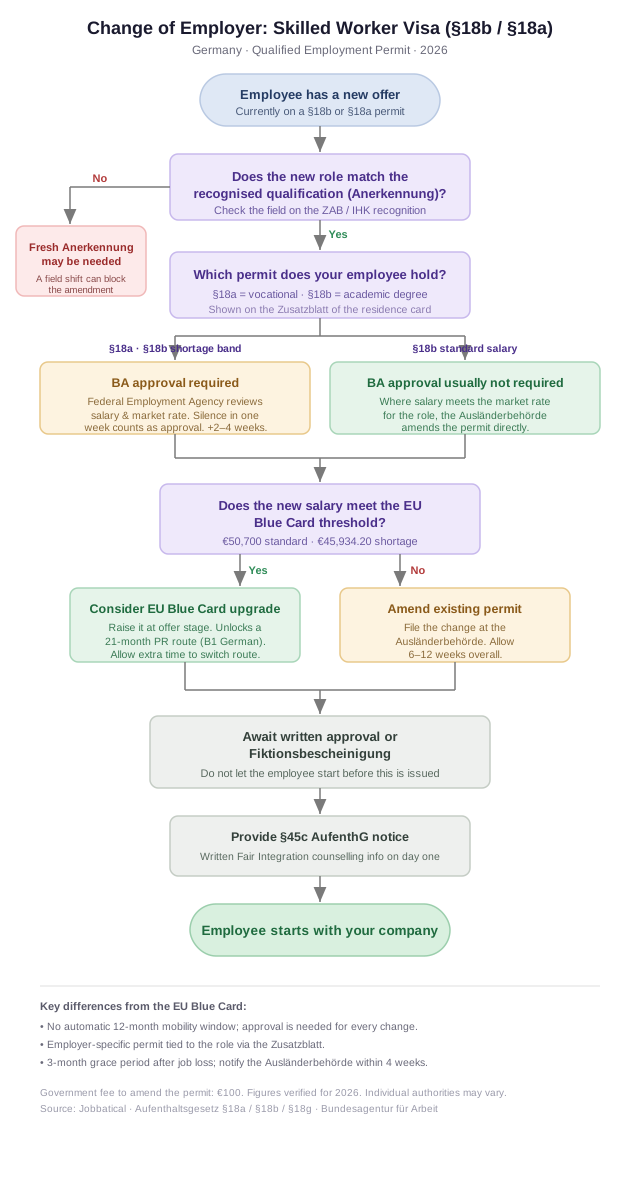
Schritt-für-Schritt-Anleitung zum Bewerbungsprozess
JobbaticalDer Service „Wechsel des Arbeitgebers“ von 's Germany übernimmt die Koordination mit der Ausländerbehörde und der BA und verringert so das Risiko von Verzögerungen aufgrund unvollständiger Unterlagen.
Welche Unterlagen sind für den Arbeitgeberwechsel erforderlich?
Checkliste für die Unterlagen zum Antrag auf Arbeitgeberwechsel
Einzelne Ausländerbehörden können zusätzliche Unterlagen anfordern. Klären Sie vor der Einreichung stets die vollständige Checkliste mit der zuständigen Behörde ab oder nutzen Sie den „Germany Employer Change Checker “.
Bearbeitungszeit und Gebühren
Die Bearbeitungsfristen und Gebühren variieren je nach Stadt und Auslastung der zuständigen Behörde.
- Berlin: etwa 8 bis 12 Wochen ab Anfang 2026.
- München und Hamburg: oft schneller, etwa 4 bis 8 Wochen.
- Frankfurt und Düsseldorf: typischerweise Mittelklasse.
- Reguläre behördliche Gebühr für die Änderung der Genehmigung: 100 €.
- Fiktionsbescheinigung: etwa 10 bis 25 Euro.
- Beglaubigte Übersetzungen, sofern erforderlich: 40 bis 120 € pro Dokument.
Mit der Fiktionsbescheinigung kann Ihr Mitarbeiter legal arbeiten, während die neue Karte bearbeitet wird. Vergewissern Sie sich beim Antragstermin, dass diese ausgestellt wird. Ehrlich gesagt warten die meisten Unternehmen zu lange, bevor sie damit beginnen – acht Wochen sind die Mindestvorlaufzeit, die Sie einplanen sollten, und die Wartezeit auf einen Termin ist in Großstädten der größte Unsicherheitsfaktor.
Die Bearbeitungsdauer bei einem Arbeitgeberwechsel schwankt je nach Stadt zwischen 4 und 12 Wochen. Holen Sie sich zunächst eine fallspezifische Schätzung mit dem Rechner für die Bearbeitungsdauer von Aufenthaltsgenehmigungen in Deutschland.
Was passiert, wenn Ihr Mitarbeiter seinen Arbeitsplatz verliert?
Mit dem Fachkräfteeinwanderungsgesetz von 2023 wurde eine dreimonatige Übergangsfrist für Inhaber einer qualifizierten Arbeitserlaubnis eingeführt, die arbeitslos werden. Während dieses Zeitraums bleibt die Erlaubnis gültig, und der Arbeitnehmer kann in Deutschland nach einer neuen, den Anforderungen entsprechenden Beschäftigung suchen.
Als ausscheidender Arbeitgeber haben Sie folgende Pflichten:
- Benachrichtigen Sie die Ausländerbehörde innerhalb von vier Wochen nach Beendigung des Arbeitsverhältnisses unter Verwendung des offiziellen Formulars („Mitteilung über die Beendigung des Beschäftigungsverhältnisses“).
- Falls für die ursprüngliche Einstellung eine Genehmigung des BA erforderlich war, benachrichtigen Sie bitte auch den BA.
- Legen Sie ein Arbeitszeugnis vor; Ihr Mitarbeiter benötigt es, um die Übereinstimmung seiner Qualifikationen mit den Anforderungen für seine nächste Genehmigung nachzuweisen.
- Weisen Sie sie auf die Karenzfrist und ihr Recht hin, sich bei der Agentur für Arbeit als arbeitssuchend zu melden.
Dies unterscheidet sich von der EU-Blue-Card, die ebenfalls eine dreimonatige Übergangsfrist vorsieht, während dieser Zeit jedoch eine umfassendere Mobilität innerhalb der EU ermöglicht. In diesem Fall ist die Stellensuche auf Deutschland beschränkt, es sei denn, der Arbeitnehmer verfügt über einen anderen berechtigenden Status.
Könnte dies eine Weiterentwicklung der EU-Blue-Card auslösen?
Jeder Arbeitgeberwechsel ist ein Anlass, zu prüfen, ob Ihr Mitarbeiter nun die Voraussetzungen für eine EU-Blue Card erfüllt. Wenn die neue Stelle einen in Deutschland bereits anerkannten Hochschulabschluss voraussetzt und ein Gehalt von mindestens:
- 50.700 € brutto pro Jahr für Standardpositionen oder
- 45.934,20 € brutto/Jahr für Berufe mit Arbeitskräftemangel (IT, Ingenieurwesen, Gesundheitswesen, MINT),
Dann ist ein Antrag auf eine Blaue Karte anstelle der Änderung oder parallel dazu möglich. Die Vorteile sind greifbar: eine dauerhafte Aufenthaltserlaubnis bereits nach 21 Monaten bei Deutschkenntnissen auf B1-Niveau, klarere Regelungen bei Arbeitslosigkeit sowie Mobilitätsrechte innerhalb der EU. Sprechen Sie dies bereits in der Angebotsphase an. Sobald der Antrag gemäß § 18b gestellt wurde, führt ein Wechsel der Genehmigungsart zu zusätzlichem Zeitaufwand und höherer Komplexität. Unsere Serviceseite zur qualifizierten Arbeitserlaubnis in Deutschland und der Leitfaden zum Arbeitgeberwechsel bei der Blauen Karte EU behandeln beide Wege.
Hinweise zur Compliance für die Personalabteilung
§ 45c AufenthG, Pflicht zur „Faire Integration“: Ab dem 1. Januar 2026 muss jeder Arbeitgeber, der einen Facharbeitnehmer aus einem Nicht-EU-Land einstellt, diesen bis zum ersten Arbeitstag schriftlich über kostenlose arbeits- und sozialrechtliche Beratung (z. B. das Netzwerk „Faire Integration“) informieren. Dies gilt auch für zugewanderte Arbeitnehmer, die den Arbeitgeber wechseln. Dokumentieren Sie dies. Lesen Sie dazu unseren Leitfaden zu den Arbeitgeberpflichten gemäß § 45c.
Anerkennung von Abschlüssen während des Übergangs: Falls die ursprüngliche Anerkennung an Bedingungen geknüpft war (teilweise Anerkennung mit noch ausstehender Ausgleichsmaßnahme), prüfen Sie vor der Einreichung, ob die Bedingung erfüllt ist. Eine noch ausstehende Ausgleichsmaßnahme kann die Änderung verhindern.
Laufende BA-Verpflichtungen: Die Genehmigung wird für eine bestimmte Funktion erteilt. Die Beförderung Ihres Mitarbeiters in eine wesentlich andere Funktion, insbesondere in einen anderen Bereich, erfordert möglicherweise ein neues Verfahren zur Arbeitgeberänderung.
Haftungsausschluss: Die Einreisebestimmungen ändern sich häufig; bitte informieren Sie sich bei offiziellen Stellen oder kontaktieren Sie uns, um die aktuellsten Informationen zu erhalten, bevor Sie Entscheidungen treffen.
Häufig gestellte Fragen: Deutschland – Visum für Fachkräfte – Arbeitgeberwechsel

.svg)
.svg)