.svg)


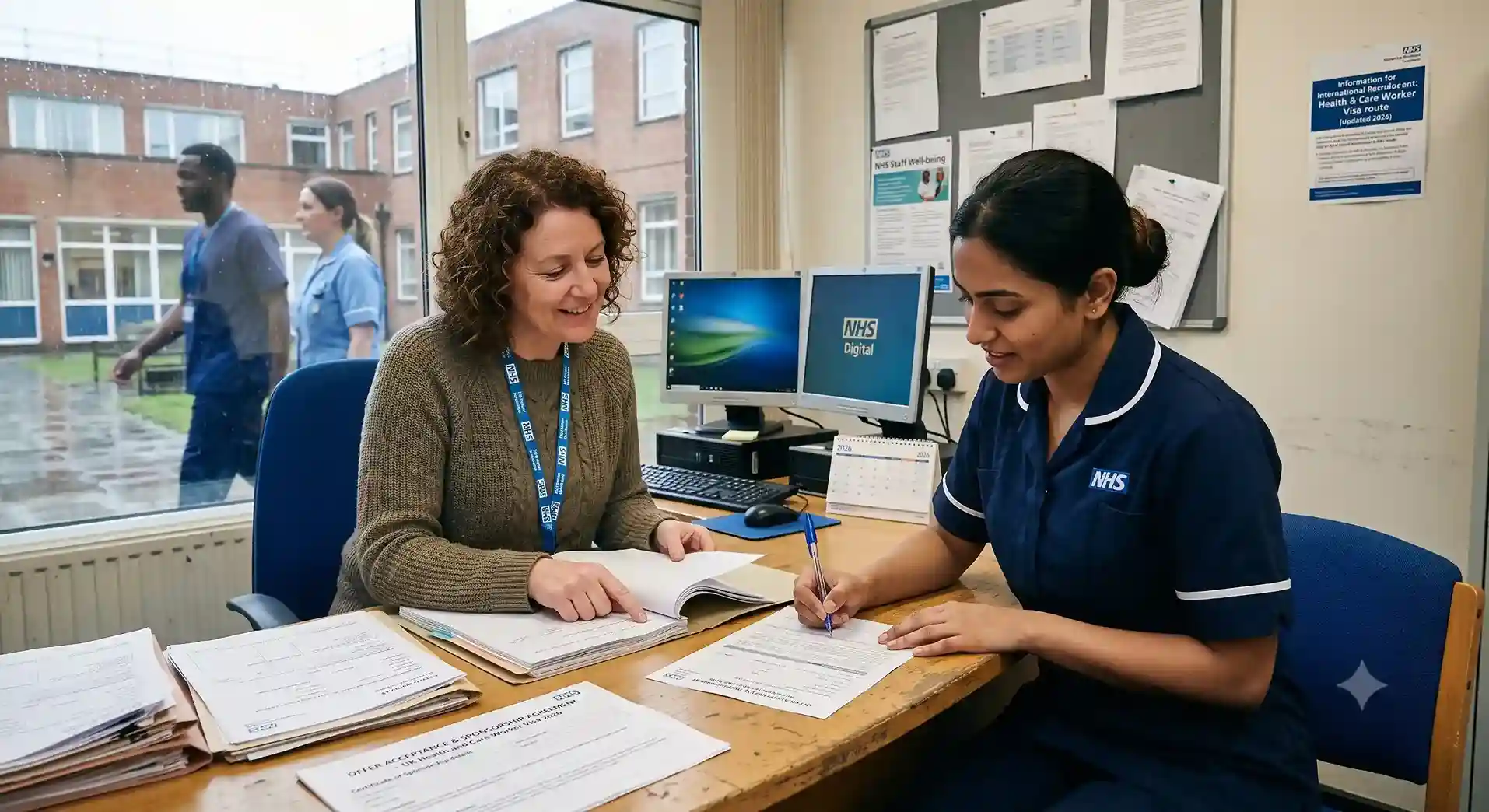
WICHTIGSTE ERKENNTNISSE
- No Immigration Health Surcharge: Health and Care visa holders and dependants are exempt, saving £1,035 per person per year vs the standard Skilled Worker route. Application fee is £324 (up to 3 years) or £628 (over 3 years) as of 8 April 2026, with sponsors also exempt from the Immigration Skills Charge.
- Salary thresholds: £25,000 for national pay-scale roles (most NHS Agenda for Change positions), or £31,300 general floor, or the occupation going rate whichever is highest. Standard Skilled Worker floor is £38,700. New pay-period rule (from 8 April 2026) means the threshold must be met every pay period.
- Care worker closure: overseas recruitment for care workers and senior care workers (SOC 6135/6136) closed on 22 July 2025; in-country switching runs to 22 July 2028. New care roles have had no dependant rights since 11 March 2024. Clinical roles (nurses, doctors) are unaffected.
- Processing & English: ~3 weeks standard (5 working days on priority). New applicants need B2 English from 8 January 2026.
- Settlement: 5-year route to ILR remains in force; the proposed 10/15-year "earned settlement" model is not yet law.
Hiring overseas healthcare workers? The UK Health and Care Worker visa remains the fastest and most cost-effective immigration route for sponsoring nurses, doctors, and allied health professionals. However, 2026 brings major updates. Visa application fees increased in April, English language requirements tightened in January, and the overseas recruitment route for care workers closed completely in July 2025.
This UK employer sponsorship guide covers current 2026 visa costs, minimum salary thresholds, eligibility criteria, and processing times. With NHS staff shortages projected to hit 570,000 by 2036, mastering these UKVI compliance rules is vital for HR and global mobility teams. Always confirm final details on the official GOV.UK website.
┈┈┈┈┈┈┈┈┈┈┈┈┈┈┈┈┈┈┈┈┈┈┈┈┈┈┈┈┈┈┈┈┈┈┈┈┈┈┈┈┈┈┈┈┈┈┈
What is the Health and Care Worker Visa?
This is a specialized sub-route of the standard UK Skilled Worker visa. It is designed exclusively for qualified medical and social care professionals sponsored by NHS trusts, NHS-contracted suppliers, or CQC-registered care providers.
Key advantages for employers include:
- No Immigration Health Surcharge (IHS): Standard visa applicants pay £1,035 per person annually. Healthcare workers and their dependents pay nothing, creating massive cost savings.
- Lower application fees: Upfront visa costs are heavily discounted compared to the standard Skilled Worker route.
- No Immigration Skills Charge: Sponsoring employers avoid the standard £480 to £1,320 annual fee per sponsored worker.
- Faster decisions: UK Visas and Immigration (UKVI) prioritizes these applications, with processing times averaging just three weeks.
- Dedicated UKVI support: Sponsors get direct access to a specialized UKVI helpdesk to resolve eligibility and application issues quickly.
While these exemptions save employers thousands of pounds per hire, the trade-off is strict regulatory compliance. Getting the salary threshold, occupation code, or sponsorship evidence wrong will result in an immediate visa refusal.
┈┈┈┈┈┈┈┈┈┈┈┈┈┈┈┈┈┈┈┈┈┈┈┈┈┈┈┈┈┈┈┈┈┈┈┈┈┈┈┈┈┈┈┈┈┈┈
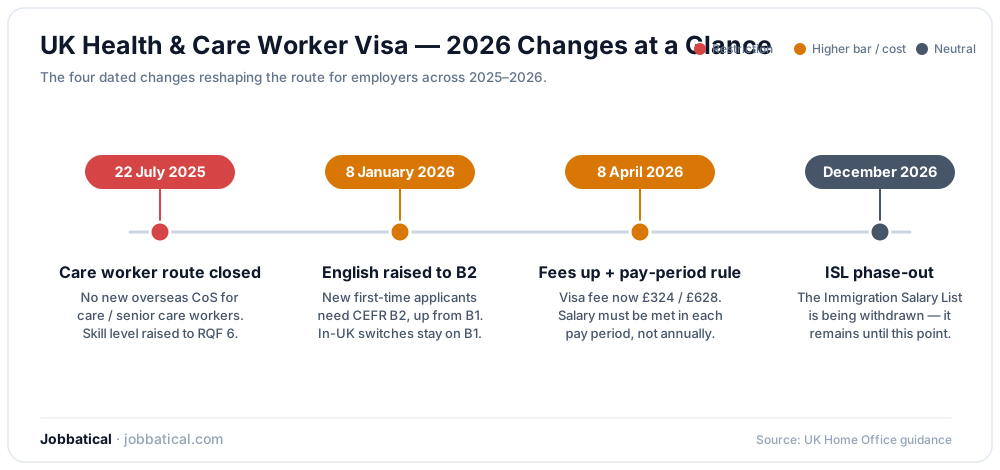
UK Health and Care Worker Visa 2026 Changes
If you are sponsoring healthcare professionals, you must stay updated on the latest UKVI compliance rules and Skilled Worker visa updates. Here are the critical changes you need to know:
- 2026 visa application fees: On April 8, 2026, applicant fees increased to £324 for visas up to three years and £628 for visas over three years.
- Higher English language requirements: As of January 8, 2026, new applicants must achieve CEFR B2 (IELTS 5.5). Existing workers extending or switching their visa remain at B1.
- Overseas care worker sponsorship closed: Since July 22, 2025, employers can no longer sponsor overseas care workers (SOC codes 6135 and 6136). In-country switching is permitted until July 22, 2028.
- Skill level increase: Sponsored roles must now meet RQF Level 6 (degree equivalent), which permanently removes basic care roles from new overseas recruitment.
- Strict pay-period compliance: Since April 8, 2026, workers must meet the minimum salary threshold every single pay period. A single month of low pay due to unpaid leave or variable hours risks a sponsor breach.
- Immigration Salary List (ISL) phase-out: The ISL, which currently allows discounted salary rates, will end completely by December 2026.
┈┈┈┈┈┈┈┈┈┈┈┈┈┈┈┈┈┈┈┈┈┈┈┈┈┈┈┈┈┈┈┈┈┈┈┈┈┈┈┈┈┈┈┈┈┈┈
Health and Care visa costs in 2026: what to budget ?
Costs fall into two buckets, what the applicant pays, and what you pay as the sponsor. Here's the applicant side, based on the 8 April 2026 fee schedule.
Application fees are often reimbursed by employers as part of a relocation package, so factor them into your offer. The maintenance requirement can be waived if you certify on the Certificate of Sponsorship that you'll cover the worker's first month of costs.
On the sponsor side:
- Sponsor licence: £611 (small or charity) or £1,682 (medium/large), valid for four years. Processing takes roughly eight weeks.
- Certificate of Sponsorship (CoS): £525 per certificate.
- Immigration Skills Charge: exempt for Health and Care roles (a genuine saving versus the standard route).
Related Reads:
For a full breakdown of employer-side costs and how they've changed, see our UK Sponsor Licence, CoS and fee update for 2026.
If you don't yet hold a licence, start with our sponsor licence guide for health and care employers.
┈┈┈┈┈┈┈┈┈┈┈┈┈┈┈┈┈┈┈┈┈┈┈┈┈┈┈┈┈┈┈┈┈┈┈┈┈┈┈┈┈┈┈┈┈┈┈
Health and Care visa vs standard Skilled Worker visa
The clearest way to see the value is side by side. The gap is driven mostly by the IHS exemption and the lower salary floor.
Over a five-year hire, the IHS exemption alone saves more than £5,000 per person before you count the lower application and skills-charge costs.
┈┈┈┈┈┈┈┈┈┈┈┈┈┈┈┈┈┈┈┈┈┈┈┈┈┈┈┈┈┈┈┈┈┈┈┈┈┈┈┈┈┈┈┈┈┈┈
UK Health and Care Worker Visa Salary Thresholds 2026
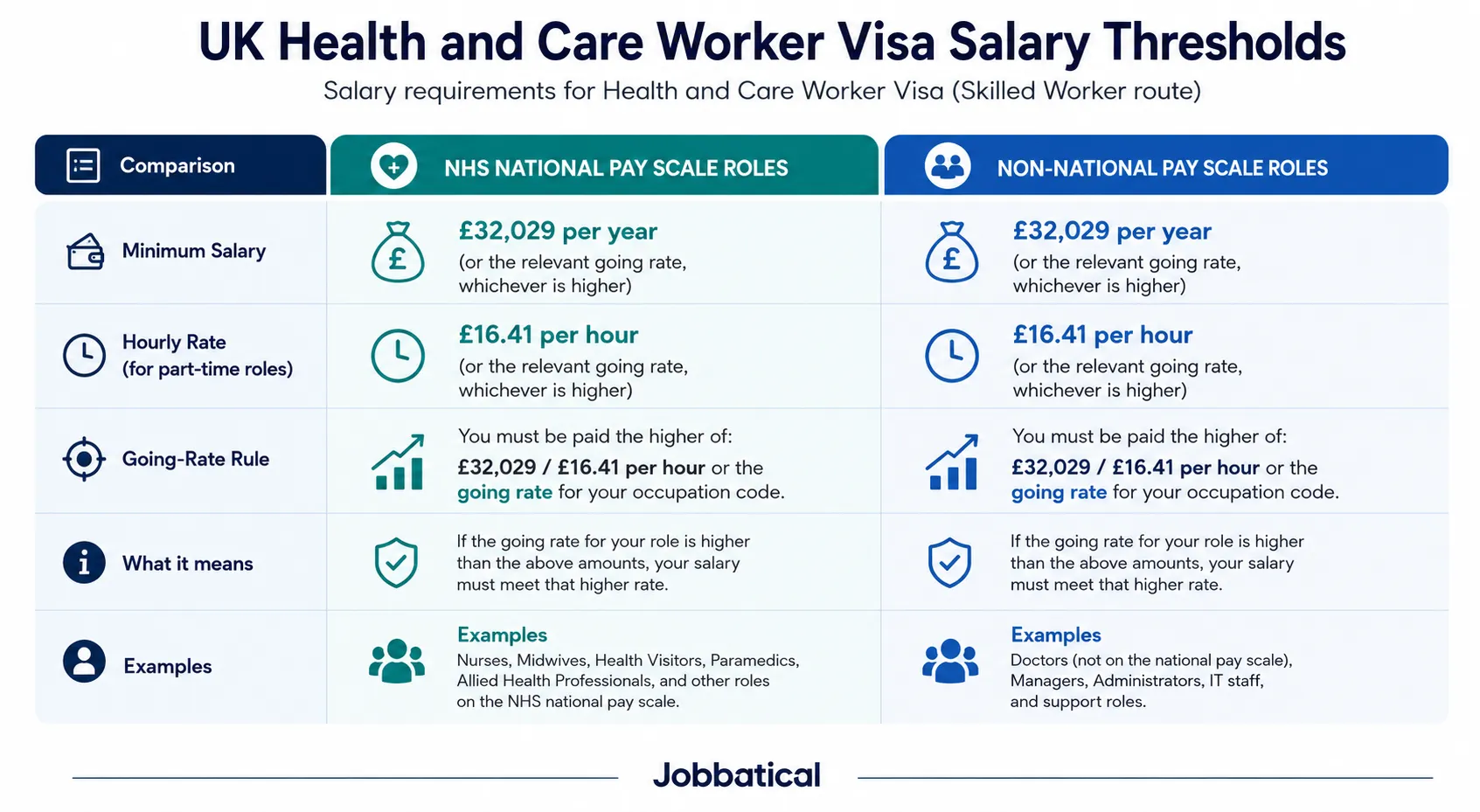
The minimum salary requirement for the UK Health and Care Worker visa is not a single flat rate. Employers must pay the higher of the specific visa threshold or the occupation’s going rate.
Here are the 2026 minimum salary requirements for sponsoring healthcare professionals:
- National pay-scale roles: Most NHS Agenda for Change positions, such as registered nurses, require a minimum of £25,000 annually or £12.82 per hour. NHS Band 5 roles and above usually meet this UKVI requirement easily.
- Non-national pay-scale health roles: Private sector healthcare jobs now have a general minimum salary threshold of £31,300, up from £29,000.
- Standard Skilled Worker comparison: The standard Skilled Worker visa minimum salary is £38,700, making the Health and Care visa a highly cost-effective sponsorship route for UK employers.
- Salary discounts: Employers can offer reduced minimum rates for "new entrants", including workers under 26, recent graduates, trainees, or those switching from a UK Student visa. Discounts also apply to specific PhD-linked roles, provided the final salary still meets the absolute minimum allowed.
Here's how common NHS roles typically map against the threshold. Treat these as indicative, always check the current going rate for the specific SOC code on GOV.UK.
Remember the new pay-period rule: the worker has to be at or above the threshold in every pay period, so watch variable hours, unpaid leave, and part-time contracts carefully.
Related Read:
For a fuller view of which roles qualify, see our guide to eligible Health and Care visa roles.
┈┈┈┈┈┈┈┈┈┈┈┈┈┈┈┈┈┈┈┈┈┈┈┈┈┈┈┈┈┈┈┈┈┈┈┈┈┈┈┈┈┈┈┈┈┈┈
Health and Care Worker Visa Eligibility and Care Worker Closure
To qualify for a UK Health and Care Worker visa, candidates must work in an approved clinical role and hold registration with a UK professional regulator such as the NMC, GMC, GPhC, HCPC, GDC, or GOC.
Eligible and Ineligible Roles:
- Eligible healthcare roles: Registered nurses, doctors, midwives, pharmacists, paramedics, physiotherapists, occupational therapists, radiographers, and other qualified clinical professionals.
- Ineligible healthcare roles: Administrative staff, wellbeing coordinators, support workers without clinical registration, and most social workers.
Care Worker Recruitment Closure Rules:
- March 11, 2024: Care workers and senior care workers (SOC 6135 and 6136) lost the right to bring family dependants to the UK.
- July 22, 2025: Overseas recruitment for care workers closed completely for all UK sponsors.
- July 22, 2028: Final deadline for care workers already inside the UK to extend their visa or switch employers in-country.
- Clinical roles unaffected: Doctors, nurses, and allied health professionals are exempt from this ban and remain fully eligible for overseas sponsorship.
Related Read:
We cover the family-side impact in detail in our care worker dependant guide.
┈┈┈┈┈┈┈┈┈┈┈┈┈┈┈┈┈┈┈┈┈┈┈┈┈┈┈┈┈┈┈┈┈┈┈┈┈┈┈┈┈┈┈┈┈┈┈
UK Health and Care Worker Visa Dependants 2026
For most healthcare professionals, bringing family to the UK is still permitted. This remains a major advantage for global mobility teams recruiting international talent.
- Eligible dependants: Partners and children of doctors, nurses, and allied health professionals can join the main applicant. They pay the same reduced visa application fee and remain exempt from the Immigration Health Surcharge.
- Care worker restrictions: Since March 11, 2024, new care workers and senior care workers cannot bring family to the UK. Workers who arrived before this date retain their dependant visa rights.
Related Read:
For the full eligibility and evidence requirements, see our Health and Care visa dependants guide.
┈┈┈┈┈┈┈┈┈┈┈┈┈┈┈┈┈┈┈┈┈┈┈┈┈┈┈┈┈┈┈┈┈┈┈┈┈┈┈┈┈┈┈┈┈┈┈
Health and Care Visa Processing Times 2026
The UKVI fast-track visa processing makes this route ideal for urgent hiring. Most delays stem from missing documents, so HR teams must verify English language and qualification evidence before submission.
- Outside the UK: Main applicants usually receive a decision within three weeks of submitting biometrics.
- Inside the UK: Visa extensions or in-country switches also process in around three weeks.
- Dependant applications: Family visa processing takes up to eight weeks.
- Priority service: For an additional fee, applicants can expedite UKVI decisions to just five working days.
- Certificate of Sponsorship (CoS): Depending on your employer sponsor status, securing a CoS adds one to eight weeks to the timeline.
┈┈┈┈┈┈┈┈┈┈┈┈┈┈┈┈┈┈┈┈┈┈┈┈┈┈┈┈┈┈┈┈┈┈┈┈┈┈┈┈┈┈┈┈┈┈┈
UK Health and Care Worker Visa English Requirements 2026
To meet UKVI compliance, employers must ensure healthcare candidates pass the correct English language test before applying.
- New applicants: From January 8, 2026, all first-time overseas candidates must achieve CEFR B2, which requires a minimum IELTS 5.5 across reading, writing, speaking, and listening.
- Existing workers: Healthcare staff already in the UK extending or switching their visa remain on the lower B1 standard.
- Professional regulators: Bodies like the NMC and GMC often require specific language assessments. A single IELTS Academic or OET can sometimes satisfy both UKVI and professional rules, saving both time and money.
┈┈┈┈┈┈┈┈┈┈┈┈┈┈┈┈┈┈┈┈┈┈┈┈┈┈┈┈┈┈┈┈┈┈┈┈┈┈┈┈┈┈┈┈┈┈┈
Indefinite Leave to Remain (ILR) and Settlement Rules 2026
Navigating UK immigration settlement rules is critical for long-term staff retention. Here is what employers and global mobility teams need to know about the path to ILR for healthcare workers.
- Current five-year route: As of 2026, Health and Care Worker visa holders remain on the standard 5-year path to Indefinite Leave to Remain. Staff should apply as soon as they qualify.
- Proposed 10-year rule: Government proposals for a 10-year "earned settlement" path are still under review and are not yet law. Employers should continue to rely on the current 5-year rules.
- ILR fee increase: On April 8, 2026, the standard ILR application fee increased to £3,226.
- Future ILR English test: The English language standard for settlement applications will officially rise to B2 on March 26, 2027.
Because this is moving, treat any "10-year rule" headline with care and plan around the current five-year route.
Related Read:
We track the detail in our UK earned settlement and ILR updates.
┈┈┈┈┈┈┈┈┈┈┈┈┈┈┈┈┈┈┈┈┈┈┈┈┈┈┈┈┈┈┈┈┈┈┈┈┈┈┈┈┈┈┈┈┈┈┈
How to Sponsor a UK Health and Care Worker
Sponsoring an overseas healthcare professional requires four key steps to ensure UKVI compliance:
- Obtain a UK sponsor licence: Employers must prove genuine operations, establish compliant HR systems, assign named Key Personnel, and provide CQC registration for care roles in England.
- Assign a Certificate of Sponsorship (CoS): Select the correct SOC code, ensure salary meets 2026 thresholds, and outline qualifying duties. Candidates must use the CoS within three months.
- Submit the visa application: The worker submits their application online, pays the discounted visa fee, provides biometrics, and proves English proficiency, qualifications, and UK professional registration.
- Maintain sponsor compliance: Employers must maintain accurate employment records, enforce pay-period salary thresholds, and report workforce changes to the Home Office.
Related service:
Don't hold a licence yet? Our UK Sponsor Licence service handles the application and compliance setup.
Related Read:
If you're not sure whether a role needs sponsorship at all, our overview of UK visa options and requirements is a good starting point.
┈┈┈┈┈┈┈┈┈┈┈┈┈┈┈┈┈┈┈┈┈┈┈┈┈┈┈┈┈┈┈┈┈┈┈┈┈┈┈┈┈┈┈┈┈┈┈
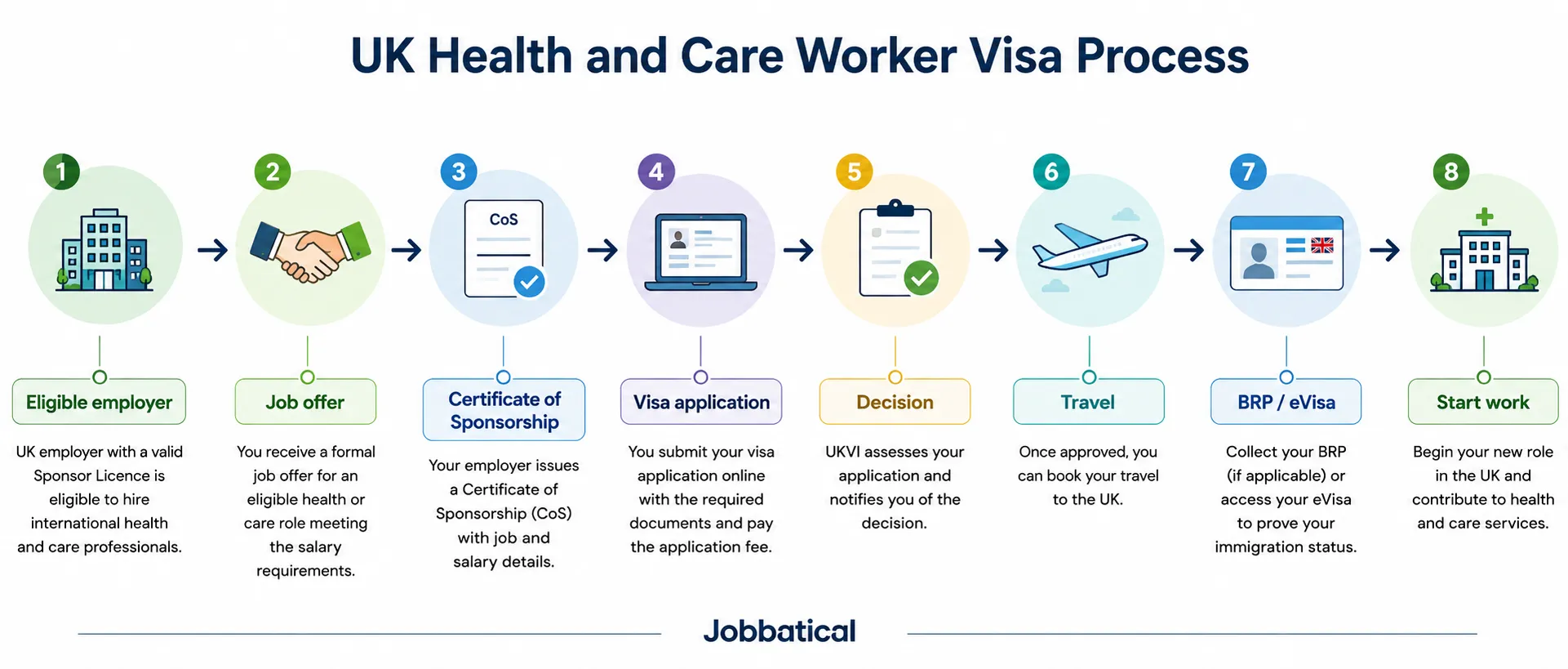
How to Apply for the UK Health and Care Worker Visa: Step-by-Step
Once the employer holds a sponsor licence and has assigned a Certificate of Sponsorship (covered in "How to sponsor" above), the worker applies online. The application itself is usually decided in about three weeks. Here's the full journey.
Documents to gather before applying:
- The Certificate of Sponsorship (CoS) reference number from the employer
- A valid passport or travel document
- Proof of English at CEFR B2 (IELTS 5.5 in each component), or a qualifying exemption
- Evidence of qualifications and UK professional registration (NMC, GMC, HCPC, and so on)
- Proof of maintenance funds (£1,270 held for 28 days), unless the sponsor certifies this on the CoS
- TB test results, if applying from a listed country
- A criminal record certificate, if applying from outside the UK for a role working with vulnerable people (some occupation codes are exempt; the sponsor will confirm)
- Relationship and birth certificates for any dependants
The application steps:
- Apply online on GOV.UK. Select the Health and Care Worker visa and create a UKVI account. Apply from outside the UK for entry clearance, or from inside the UK to switch or extend. You can apply up to three months before the start date on the CoS.
- Enter the CoS reference and pay the fees. £324 for a visa up to three years or £628 for over three years, with no Immigration Health Surcharge. A priority service can cut the decision to around five working days for an extra fee.
- Prove identity and give biometrics. Either scan the passport with the UK Immigration: ID Check app, or attend a visa application centre for fingerprints and a photo.
- Upload supporting documents and submit. Discrepancies between the documents and the CoS details are a common refusal reason, so check names, salary, and SOC code match exactly.
- Wait for the decision. Usually about three weeks from the biometric appointment for both in- and out-of-country applications; dependants can take up to eight weeks. Note that processing time counts from biometrics, not from when the form is submitted.
- Receive the outcome and eVisa. Applicants from abroad get a 90-day entry vignette to travel, then access their eVisa through their UKVI account after arrival; in-country applicants have their status updated digitally. Physical BRP cards are no longer issued.
Before the first working day, the employer completes an online right-to-work check using the worker's eVisa share code and reports the start date to the Home Office. Ongoing pay-period and record-keeping duties then apply.
Related read:
The Certificate of Sponsorship step has its own rules for health and care roles SOC codes, the eligibility statement, and the £525 fee. Our CoS in healthcare guide walks through assigning one.
┈┈┈┈┈┈┈┈┈┈┈┈┈┈┈┈┈┈┈┈┈┈┈┈┈┈┈┈┈┈┈┈┈┈┈┈┈┈┈┈┈┈┈┈┈┈┈
Employer Cost Savings: Health and Care Visa vs. Skilled Worker Visa
The Health and Care Worker visa offers massive financial advantages over the standard Skilled Worker route, primarily due to the Immigration Health Surcharge exemption.
Comparing 5-year sponsorship costs for a Band 6 nurse:
- Health and Care Worker visa cost: Total government visa fee is £628 with a £0 Immigration Health Surcharge.
- Standard Skilled Worker visa cost: Total costs reach £1,618 in application fees plus £5,175 in IHS fees, plus additional Immigration Skills Charges.
- Total employer and candidate savings: Saves over £6,000 per sponsored healthcare worker, delivering significant savings across large-scale overseas recruitment campaigns.
┈┈┈┈┈┈┈┈┈┈┈┈┈┈┈┈┈┈┈┈┈┈┈┈┈┈┈┈┈┈┈┈┈┈┈┈┈┈┈┈┈┈┈┈┈┈┈
How Jobbatical helps in sponsoring your next Health and Care Hire?
The Health and Care visa is still the most cost-effective way to bring clinical talent into the UK, but the 2026 rule changes have made compliance less forgiving. Getting the salary, occupation code, and pay-period tracking right is where hires succeed or stall.
Jobbatical's platform and immigration experts handle the route end to end, from sponsor licence and CoS issuance to visa processing and onboarding, typically cutting relocation time and cost well below traditional law firms.
Related Service :
See our UK Health and Care Worker visa services
Haftungsausschluss: Die Einreisebestimmungen ändern sich häufig; bitte informieren Sie sich bei offiziellen Stellen oder kontaktieren Sie uns, um die aktuellsten Informationen zu erhalten, bevor Sie Entscheidungen treffen.
┈┈┈┈┈┈┈┈┈┈┈┈┈┈┈┈┈┈┈┈┈┈┈┈┈┈┈┈┈┈┈┈┈┈┈┈┈┈┈┈┈┈┈┈┈┈┈
Frequently Asked Questions: UK Health and Care Worker Visa 2026

.svg)
.svg)